
Practical Application
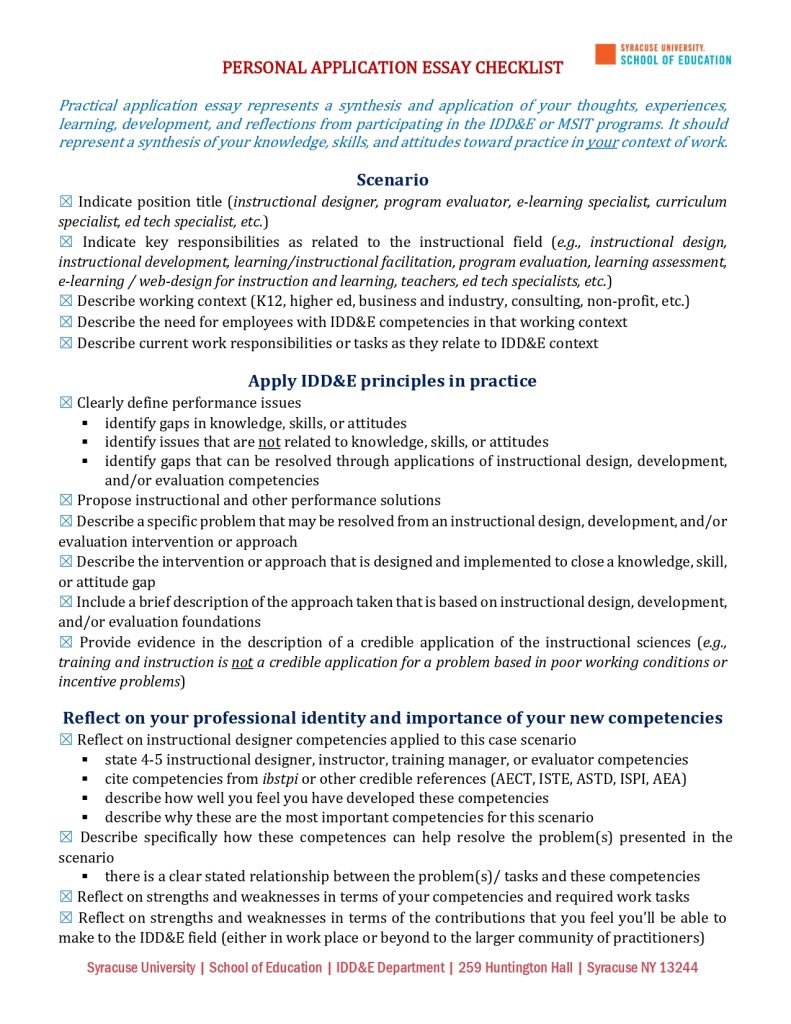
Personal Application Essay Checklist
Blended Learning for Laboratory Safety: Applying IDD&E Competencies in Practice
Organization
Title and Role: Instructional Designer at the University of Puthisastra in Cambodia. In this role, I design and implement blended learning modules to improve students’ laboratory safety practices and technical competencies. This entails creating engaging instructional materials and performance support tools so that students consistently follow lab protocols, use personal protective equipment (PPE) correctly, and set up lab equipment properly.
Working Context and Challenges: The setting is a developing university where formal instructional design expertise is just starting to be recognized. Traditionally, lab training for health science students has been delivered through brief orientation lectures and printed manuals. However, persistent issues such as inconsistent PPE usage, procedural errors, and safety incidents indicate gaps in students’ knowledge and skills. With growing enrollment and increased emphasis on meeting international safety standards, the university faces a critical challenge: how to better prepare students for safe lab practices in a resource-constrained environment.
Need for IDD&E Competencies: There is rising demand in Cambodian higher education for professionals trained in Instructional Design, Development & Evaluation (IDD&E), particularly for specialized training like health and lab safety. As universities strive for higher quality, they recognize that effective learning solutions require the systematic approach that IDD&E professionals bring (Dick & Carey, 2001; Gustafson & Branch, 2002). My role exemplifies this need: I develop safety content (infographics, tutorial videos), implement digital performance support (e.g. QR-code resources), and evaluate training effectiveness – tasks requiring the full spectrum of IDD&E skills (Instructional Designers of Penn State, 2022). By leveraging my IDD&E background, I aim to transform lab safety training from ad-hoc rule reminders into a comprehensive blended learning program grounded in learning science. In doing so, I demonstrate how IDD&E competencies like analysis, design, development, and evaluation can improve student performance and safety in the context.
Applying IDD&E Competencies in Practice
Performance Analysis: I began by defining the performance problems in the labs. Students were often unprepared or careless, leading to issues like improper PPE use (e.g., forgetting gloves or masks), incorrect handling of specimens/chemicals, and errors in setting up lab equipment. A review of lab incident reports and instructor observations revealed specific gaps: many students lacked knowledge of safety protocols (knowledge gap), some struggled with proper techniques (skill gap), and a few were complacent about safety rules (attitude/motivation gap). Non-training factors also played a role. For example, the lab had no easily accessible job aids, and overcrowding at peak times increased pressure on students. I distinguished which problems were training-related (knowledge/skill) versus environmental or organizational, ensuring that the solution targeted the right issues. I noted that knowledge and habit gaps were suitable for an instructional solution, whereas certain issues (like inadequate supplies or ventilation) fell outside training scope and had to be addressed by management.
Establishing a clear problem definition up front aligns with the front-end analysis emphasis of systematic design models (Dick & Carey, 2001). I conducted interviews with lab instructors, surveyed students, and observed lab sessions to perform a thorough needs assessment – a key competency for instructional designers (Instructional Designers of Penn State, 2022). This analysis confirmed that the main causes of safety lapses were informational and behavioral. In short, students lacked just-in-time access to safety reminders; training was too theoretical and only given at the semester’s start; and digital safety materials existed but were not integrated with actual lab activities. These findings indicated the need for an instructional solution that provides continuous, easily accessible support, rather than a one-off lecture.
Instructional Solution (Blended Learning): Based on the analysis, I designed a blended learning intervention combining formal instruction with on-demand performance support. The solution’s goal was to “close the gap” in lab safety performance by providing ongoing, easily accessible learning opportunities that reinforce safe practices. It has several components:
- Interactive E-Learning Module: A brief online module (mobile-friendly) introduces and demonstrates key lab protocols (e.g. proper lab attire, equipment usage, hygiene procedures). This module uses a microlearning format, with short lessons each focusing on a specific topic (such as correctly using PPE or operating a specific lab instrument). Each lesson includes a Camtasia video demonstration and a quick quiz. By using bite-sized content, we tap into the effectiveness of microlearning for just-in-time training, such content is easy to access on demand and allows learners to quickly get the information they need.
- Physical Infographics with QR Codes: In the labs, I posted visually engaging infographics at workstations (for example, a “5 Steps to Safely Light a Bunsen Burner” poster). Each infographic includes a QR code that students can scan to view a one-minute tutorial video or an augmented reality overlay of that procedure. These serve as just-in-time performance support tools, giving students guidance in the flow of work. This approach reflects best practices in performance support, providing information “when and where it’s needed” in the authentic environment, so students don’t have to rely solely on memory.
- Virtual Lab Walk-Through: I developed a simple virtual lab tour using 360° images and interactive hotspots that students can explore at their own pace. This virtual tour is used before the first physical lab session (and remains accessible anytime) to familiarize students with the lab environment and safety features. It reinforces lab rules by allowing students to click on objects (e.g. a biohazard bin or an emergency shower) and review the proper procedures and the purpose of each safety feature. This element reduces anxiety (students know what to expect in the lab) and reinforces safety protocols in context, providing an experiential orientation that’s more engaging than a static text manual.
- Integrated Hands-on Activities: The actual lab sessions were redesigned to integrate these new digital supports. At the start of each lab, students work in teams to complete a safety checklist activity using the infographics and QR-linked resources, essentially a guided rehearsal of key safety steps. During the lab, instructors encourage students to use the QR tutorials if they are unsure about a procedure. By embedding the use of these support tools into the class workflow, we help students form the habit of seeking just-in-time help. Lab instructors were trained to prompt students to use the new tools and to provide feedback, ensuring a consistent approach during labs.
Design Principles from IDD&E:
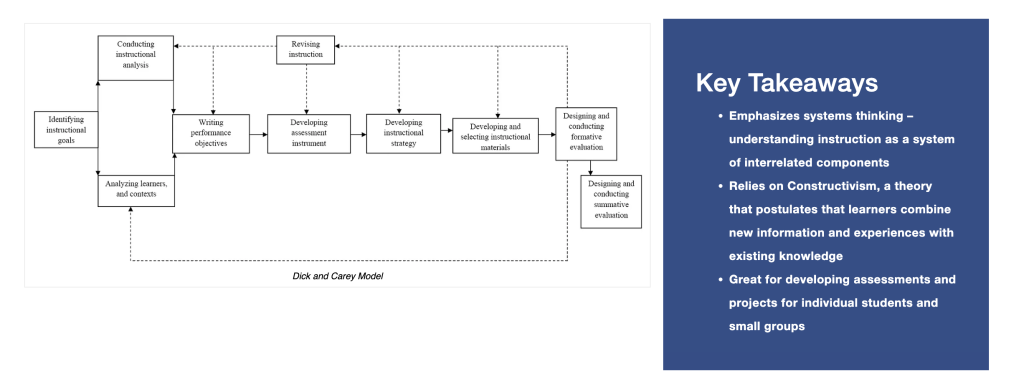
In developing the solution, I applied principles from established instructional design models and learning theories learned in my IDD&E program. I followed a systematic, iterative process from analysis through evaluation, similar to the Dick and Carey model. Such systematic models remain relevant; for example, the Dick and Carey framework was recently used to develop a modern data visualization curriculum (Friedman & Schneider, 2018), illustrating the continued utility of structured design in new domains. This process ensured clear objectives, aligned content, and continuous evaluation (Instructional Design Central, n.d.; Miller, 2025). Additionally, I applied the ADDIE model (Molenda, 2003) to structure this process: During Analysis I identified key learner characteristics (third-year undergraduates with basic lab experience), defined precise instructional goals (e.g., ensuring full compliance with PPE use), and assessed contextual constraints, such as limited lab time, high student–instructor ratio; in Design I drafted clear, action-based objectives aligned with safety behaviors and planned interactive media and aligned assessments, such as skills checklists. In Development I created multimedia materials, using Camtasia, Canva, and the LMS via rapid prototyping with student feedback; in Implementation I deployed the content through the LMS, including lab QR codes and user orientations; in Evaluation I conducted both formative feedback and a final summative assessment (Molenda, 2003). The instructional strategy was also guided by Merrill’s First Principles of Instruction and Gagné’s Nine Events of Instruction (Education Library, n.d.-a; Education Library, n.d.-b), which emphasize problem-centered learning and a proven sequence of teaching events. For example, each module began with a real-world lab scenario to grab attention and activate prior knowledge, then demonstrated the correct procedure (via video or virtual tour), followed by opportunities for students to apply the knowledge in quizzes and hands-on practice with immediate feedback, and finally an encouragement of reflection (“lessons learned”) to promote integration and transfer beyond the classroom. This approach ensured the training covered all key phases of learning (from activation and demonstration to application and integration) in an engaging way. I also drew on multiple learning theories: constructivist elements, including authentic scenarios and self-directed exploration in the virtual lab, cognitivist strategies, such as chunking content and using cues or mnemonics to aid memory, and behaviorist techniques, such as immediate feedback and reinforcement for correct actions. Additionally, I applied multimedia design principles, such as combining relevant visuals with narration and avoiding extraneous information, to maximize learning efficiency and engagement.
Evaluation Plan: True to IDD&E’s emphasis on evidence-based practice, I built in a robust evaluation plan to measure the intervention’s effectiveness. I conducted formative evaluations during development phase in order to pilot the e-learning module and virtual tour with a small group of students and gathering their feedback. Then, I used those results to refine the materials. After implementation, I carried out a summative evaluation at semester’s end to determine if the objectives were met. This included tracking lab safety incident rates to see if they decreased compared to the previous term, administering a practical lab safety exam to verify that students could perform key procedures correctly, and surveying students’ confidence in their lab skills. By comparing pre- and post-training data, we gauged the training’s impact. I also planned a follow-up evaluation a few months later to ensure students retained their safety habits in subsequent courses. Conducting both formative and summative evaluations allowed me to close the loop in the ADDIE process and ensure the solution was truly effective.
Reflection on Professional Growth and Competencies
The project allowed me to apply and strengthen key IDD&E competencies in a real-world context:
- Needs Assessment: I conducted a thorough performance needs assessment at the start of the project, analyzing gaps in student knowledge/skills. This ensured we addressed genuine needs rather than perceived symptoms, and it provided a clear roadmap for the instructional solution.
- Instructional Materials Development & Technology Integration: I developed effective learning materials (e.g. safety videos, infographics) and integrated appropriate technology tools (QR codes, a 360° virtual tour) to support learning. This competency was crucial in transforming static, text-heavy content into engaging, accessible microlearning resources that fit the students’ context and available technology.
- Instructional Design Strategy: I designed the learning experiences using sound strategies and sequencing techniques. Drawing on learning theories, I tailored the content to students by providing bilingual captions and culturally relevant examples and structured the curriculum from basic safety concepts up to more advanced procedures. This competency ensured the training was coherent, learner-centered, and effective in building students’ skills step-by-step.
- Evaluation and Assessment: I planned and implemented both formative and summative evaluations to measure the training’s effectiveness. I created surveys, quizzes, and skill checks aligned to the objectives, and analyzed the results (e.g. improved post-training test scores and reduced lab incidents) to demonstrate the intervention’s impact and inform continuous improvements.
- Project Management and Collaboration: I managed the project timeline (setting development milestones, scheduling pilot tests, etc.) and coordinated with stakeholders. By collaborating closely with lab instructors and the university safety officer, and by incorporating student feedback, I ensured the solution was feasible, well-received, and fully supported. Effective project management and teamwork helped drive the initiative to successful implementation.
Overall, this project was a capstone experience that solidified my professional identity as an instructional designer. It required me to synthesize everything I learned in the IDD&E program – from front-end analysis and learning theory to multimedia development and evaluation – and apply it to a real-world challenge. I confirmed that I excel in both the analytical and creative aspects of instructional design, and that I have a strong commitment to evidence-based practice. I also embrace a reflective practitioner mindset, constantly seeking feedback and refining my work. At the same time, I identified areas for growth: I aim to deepen my data analysis skills to extract richer insights from evaluations and learn to scale instructional solutions for broader audiences. I will also continue strengthening skills in accessibility and ethics to ensure my designs meet the highest standards for all learners.
Applying these competencies in Cambodia’s higher education context has positioned me to contribute meaningfully to the field of instructional design in my country. The successful implementation of this blended lab safety training at the university can serve as a model for other institutions in the region. I plan to share the results and lessons learned with the wider education community to advocate for the value of systematic instructional design in improving training outcomes. This project also marked my transition from being a student of IDD&E to a practitioner capable of leading change. Early feedback has been encouraging, students report greater confidence and we have observed fewer safety infractions, reinforcing my belief in the impact of well-designed instruction. Moving forward, I will continue to build on the competencies I’ve honed (analysis, design, development, evaluation, and project management) and remain a lifelong learner. I am determined to continue as an advocate and leader for effective instructional design solutions that can save time, resources, and even lives through better training, in Cambodia and beyond.
References
- Dick, W., & Carey, L. (2001). The systematic design of instruction (5th ed.). Boston, MA: Allyn and Bacon.
- Education Library. (n.d.-a). Merrill’s principles of instruction. https://educationlibrary.org/merrills-principles-of-instruction/
- Education Library. (n.d.-b). Gagné’s nine events of instruction.
- Friedman, A., & Schneider, E. (2018). Developing a visualization education curriculum in the age of big data using the Dick and Carey model. Visual Communication Quarterly, 25(4), 250–256. https://doi.org/10.1080/15551393.2018.1530115
- Gustafson, K., & Branch, R. (2002). Survey of instructional development models. ERIC Clearinghouse on Information & Technology, Syracuse, NY.
- Hostos Community College. (n.d.). Dick and Carey model of instructional design. EdTech at Hostos. https://commons.hostos.cuny.edu/edtech/faculty/teaching-with-technology/instructional-design/dick-and-kerry/https://educationlibrary.org/gagnes-nine-events-of-instruction/0
- Instructional Design Central. (n.d.). Instructional design models. https://www.instructionaldesigncentral.com/instructionaldesignmodels
- Instructional Designers of Penn State. (2022). Instructional designer’s handbook (Open access textbook). Penn State University. https://psu.pb.unizin.org/idhandbook/
- Miller, J. (2025, February 22). Dick and Carey model. https://www.jeseciamiller.com/learning-models/dick-and-carey-model
Molenda, M. (2003), In search of the elusive ADDIE model. Perf. Improv., 42: 34-36. https://doi-org.libezproxy2.syr.edu/10.1002/pfi.4930420508