
IDE 621 – Principles of Instruction and Learning
Grade: A
Professor: Rob Pusch
This course introduces foundational theories of learning and instruction, emphasizing the application of behavioral, cognitive, and constructivist perspectives to instructional design. Students analyze how people learn and explore how instructional strategies can be aligned with learning goals across diverse contexts. It builds a theoretical base for designing effective, learner-centered instruction in educational and professional settings
Primary Project
Knowledge Base Project
Project Title: Knowledge Base Site–Learning and Instructional Design Theories
Author: Soroth San
Project Description:
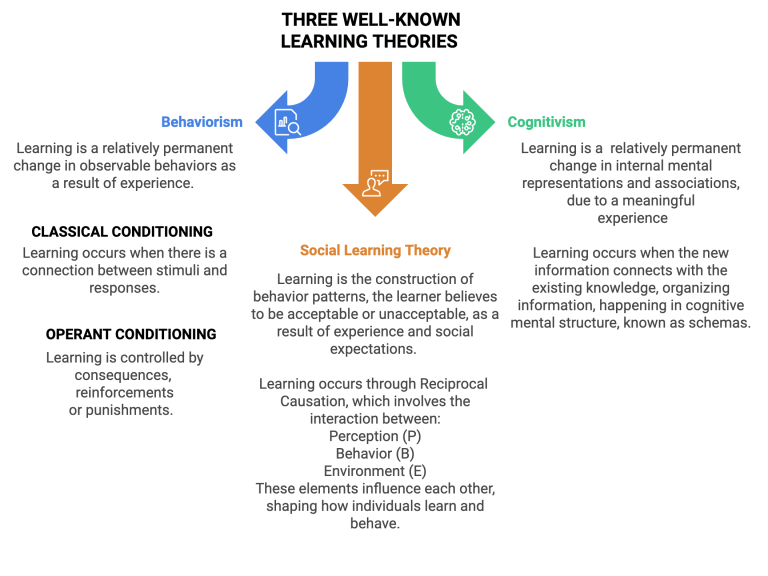
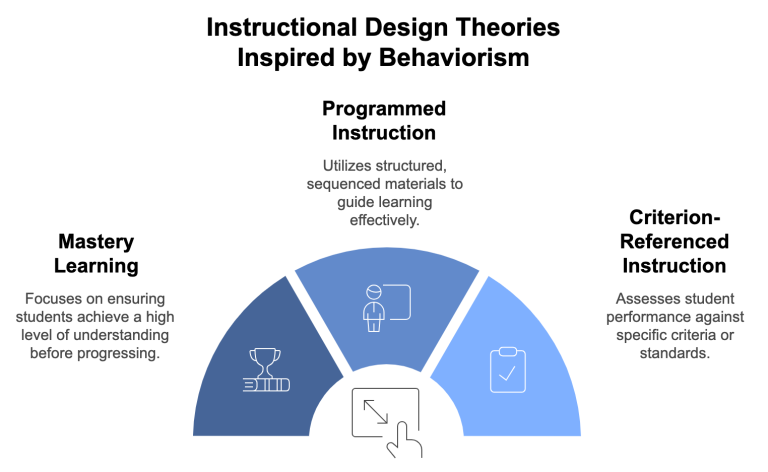
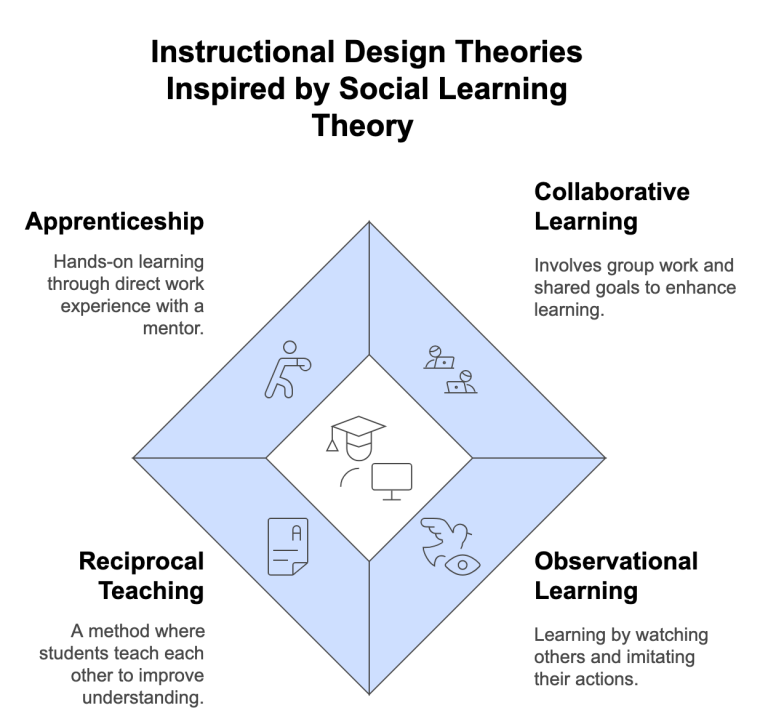
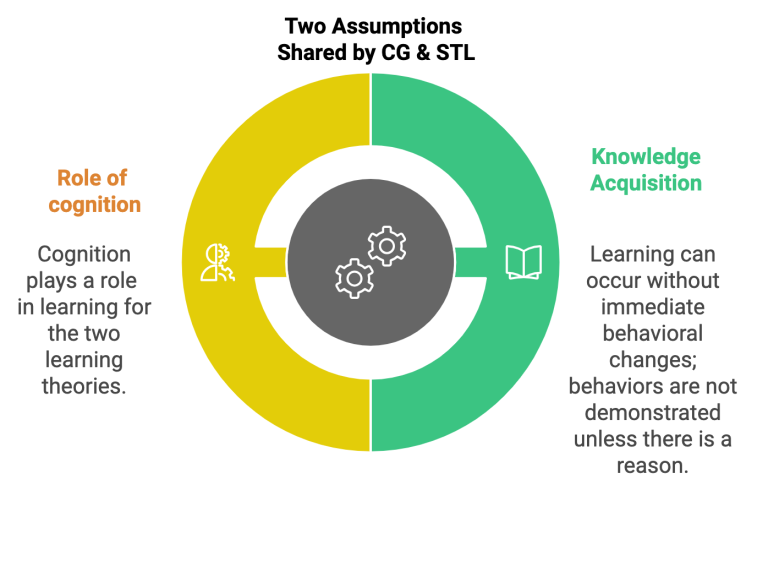
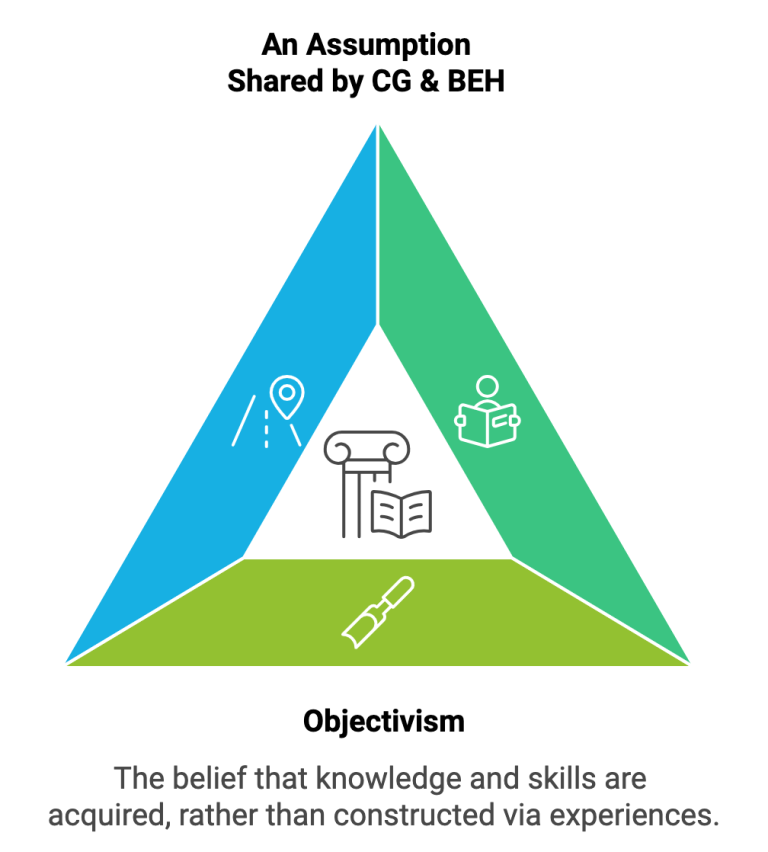
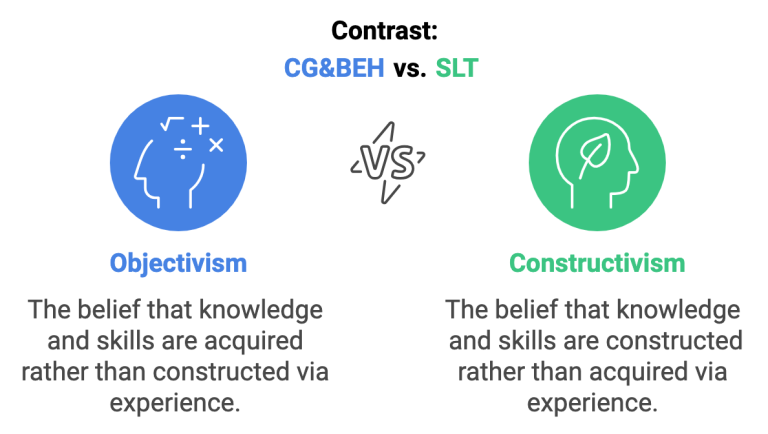
Developed as a final project for the IDE 621 course, this website-based knowledge base explores how foundational learning theories inform effective instructional design. It highlights three core theories, such as Behaviorism, Cognitivism, and Social Learning Theory, and connects each to relevant instructional models such as Programmed Instruction, Gagné’s Nine Events of Instruction, and Bandura-inspired modeling strategies.
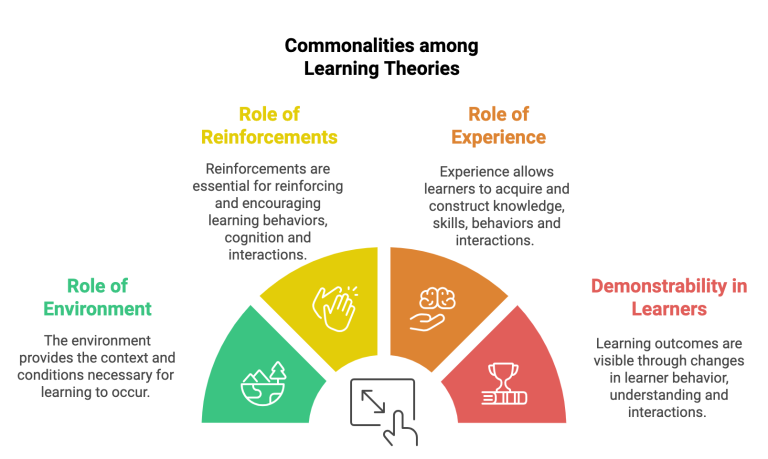
To support learner understanding, the site features paired infographics for each theory: one explaining key theoretical concepts, and another demonstrating how those concepts translate into practical instructional strategies. Realistic instructional scenarios and theory-specific evaluation checklists are also included, offering educators tools to assess alignment between theory and practice. Reflective summaries examine each theory’s instructional strengths, limitations, and applications across learning contexts.
The site emphasizes clarity, accessibility, and academic rigor. It was designed to transform complex theoretical material into an engaging, learner-centered resource, combining instructional design principles with strong visual communication and digital design.
Completing this project required around 35 hours and significantly enhanced my abilities in Google Sites, visual design, and infographic creation. Most importantly, it pushed me to translate complex learning theories into a clear, learner-focused structure while upholding both academic rigor and visual coherence.
View the full Knowledge Base site here.
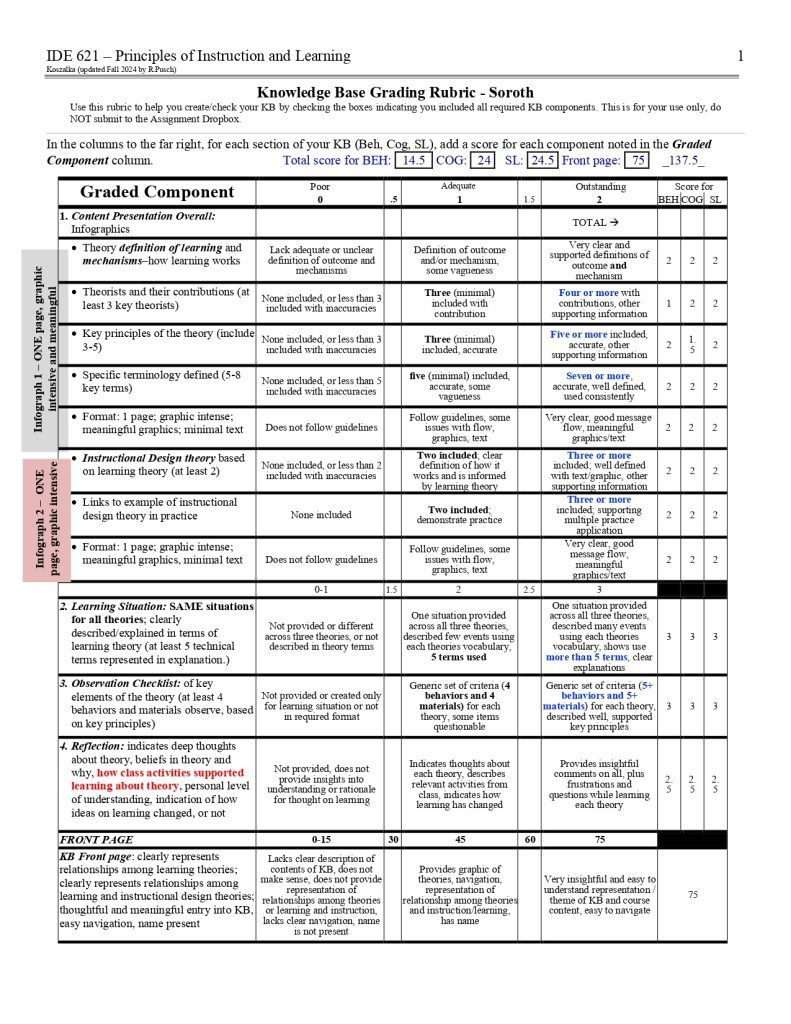
View the professor’s evaluation of the project.

Reflection & Self-Assessment
Developing this knowledge base was more than an academic task. It served as a deeply reflective and personally enriching experience. The process enhanced my grasp of how learning takes place, whether through behavioral reinforcement, cognitive structuring, or social interaction, and deepened my awareness of how these theoretical frameworks should directly inform instructional design decisions.
One of the most profound shifts during this project was in my perspective on instruction itself. Rather than viewing instruction through the lens of content delivery, I began to consider it from the learner’s point of view. This shift is essential for instructional designers, whose role is not just to organize content but to design experiences that anticipate how learners engage, think, and grow through interaction with the material.
A particularly meaningful outcome of this project is its real-world application. I intend to maintain the site and supporting materials to make them more accessible to educators and trainers in my home country, where formal training in instructional design is limited. I believe this resource, grounded in theory, visually engaging, and practically oriented, can serve as a valuable entry point for those looking to improve teaching and learning through evidence-based approaches.
This experience not only reinforced theoretical understanding but also shaped my appreciation of instructional design as a field that merges analytical thinking with creative problem-solving. It affirmed the value of thoughtful, learner-centered design and strengthened my commitment to making instructional content meaningful, inclusive, and accessible.
Secondary Project
Final Thought Paper
Project Title: Final Thought Paper
Author: Soroth San
Project Description:
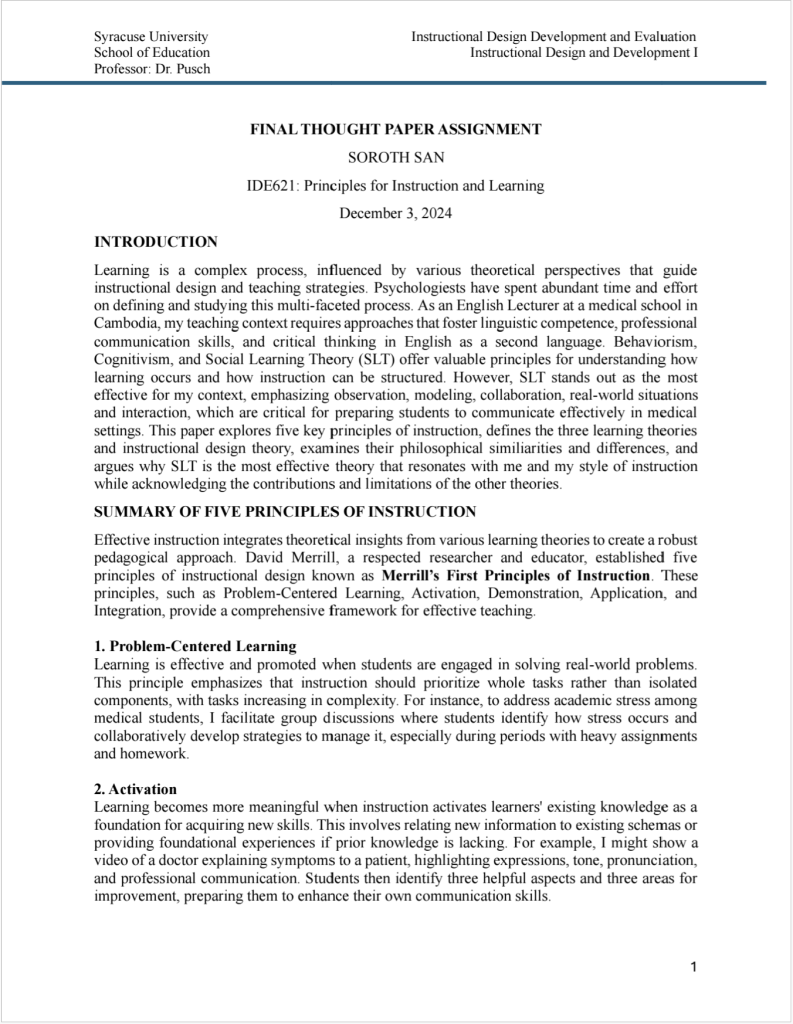
This individual assignment was completed for IDE 621 – Principles of Instruction and Learning (Fall 2024, Syracuse University). The Final Thought Paper was a reflective project that applied key instructional theories to the author’s teaching context as an English lecturer at a Cambodian medical school, where developing students’ linguistic competence, communication skills, and critical thinking in English was paramount. The paper critically examined three learning theories, such as Behaviorism, Cognitivism, and Social Learning Theory (SLT), and concluded that SLT’s emphasis on observation, modeling, and social interaction most effectively met the needs of learners in medical contexts, while also acknowledging the contributions of behavioral and cognitive strategies. The project demonstrated strong instructional design insight and effectively bridged theory to practice through a structured, contextualized, and learner-centered approach.
View the full Final Thought Paper here.
Reflection & Self-Assessment
This project deepened my understanding of how learning theories shape instructional practices. Through critical comparison, I refined my ability to analyze theoretical foundations and their relevance to real-world teaching, particularly in my context as an English lecturer at a Cambodian medical school. Applying Social Learning Theory (SLT) reinforced my commitment to learner-centered instruction that values modeling, peer interaction, and cultural context. I strengthened my skills in instructional alignment, practical application, and reflective teaching. One key challenge was articulating nuanced distinctions among theories while acknowledging their strengths, an exercise that sharpened my analytical thinking. This project shifted my perspective from viewing learning theories as abstract concepts to seeing them as tools that directly inform professional practice. The final product reflects my growth as an instructional designer, capable of designing context-responsive, theory-informed interventions that support students’ language development and professional readiness, or create well-designed training, instruction, and curriculum that is effective, engaging, and interactive to meet the needs of learners or participants.