IDE 631 – Instructional Design and Development I
Grade: A
Professor: Rob Pusch
This course introduces the foundational principles and systematic process of instructional design. Students learn to analyze learning and performance problems, design instructional solutions using established models, and apply practical skills to real-world projects. Emphasis is placed on developing competencies aligned with industry standards, such as learner analysis, objective writing, instructional strategies, and prototype development.
Primary Project
Hybrid Training for Student Employees on Title IX Mandated Reporting
Project Title: Hybrid Training for Student Employees on Title IX Mandated Reporting
Contributors: Soroth San, Emma Pate, and Chynara Turatbek Kyzy
Project Description:
This assignment was completed for IDE 631 – Instructional Design and Development I (Fall 2024, Syracuse University). Our team designed a hybrid instructional solution to address performance gaps in Title IX understanding and reporting among Supplemental Instructors (SIs) at the University of North Texas. We developed a 1.5-hour self-paced online module and a 1.5-hour in-person scenario-based workshop. I contributed to the Development, Storyboarding, and Evaluation phases, integrating interactive content and real-world applications. The training focuses on legal responsibilities, scenario recognition, and confident reporting practices. This project strengthened our skills in Needs Analysis, Instructional Design, and Evaluation, while addressing a real-world compliance issue in higher education.
View the full Final Project Report here.
IDE631_Final-Design-Report_SSan_EPate_CTuratbekkyzy_finaldesignreport
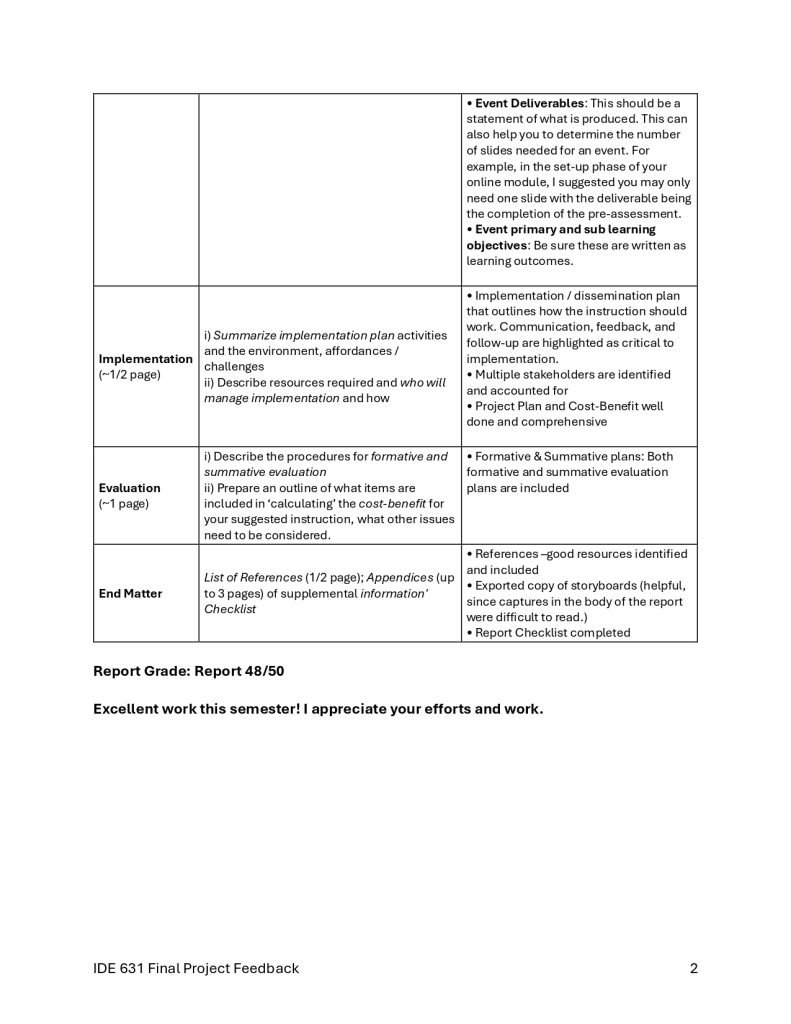
View the professor’s evaluation of the project.
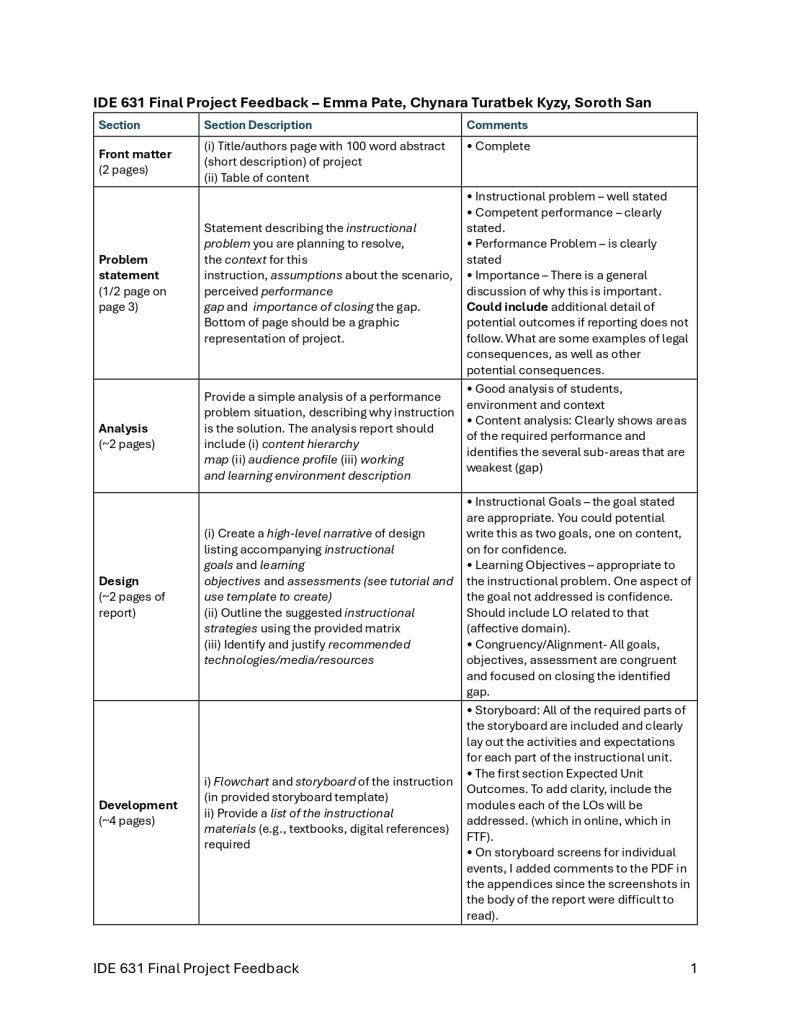
Reflection & Self-Assessment
This project significantly strengthened my ability to design instruction that addresses real performance gaps in the workplace. I learned how to analyze complex problems, such as student employees’ confusion about Title IX, and translate them into actionable learning objectives. Through developing the storyboard and evaluation plans, I refined my skills in aligning content, assessment, and delivery across both online and in-person formats. One challenge was designing realistic, scenario-based learning while maintaining legal accuracy and learner engagement. Collaborating with my team helped overcome this, allowing us to blend our expertise effectively. This experience shifted my perspective on instructional design from focusing solely on content delivery to emphasizing behavioral outcomes and learner confidence. I now recognize the powerful role that instructional design plays in promoting legal compliance, empathy, and workplace readiness. The final product demonstrates how thoughtfully designed training is able to reduce risk, foster confidence among SIs, and contribute to a culture of safety and accountability in higher education settings.
Final Project Presentation: Hybrid Training for Student Employees on Title IX Mandated Reporting
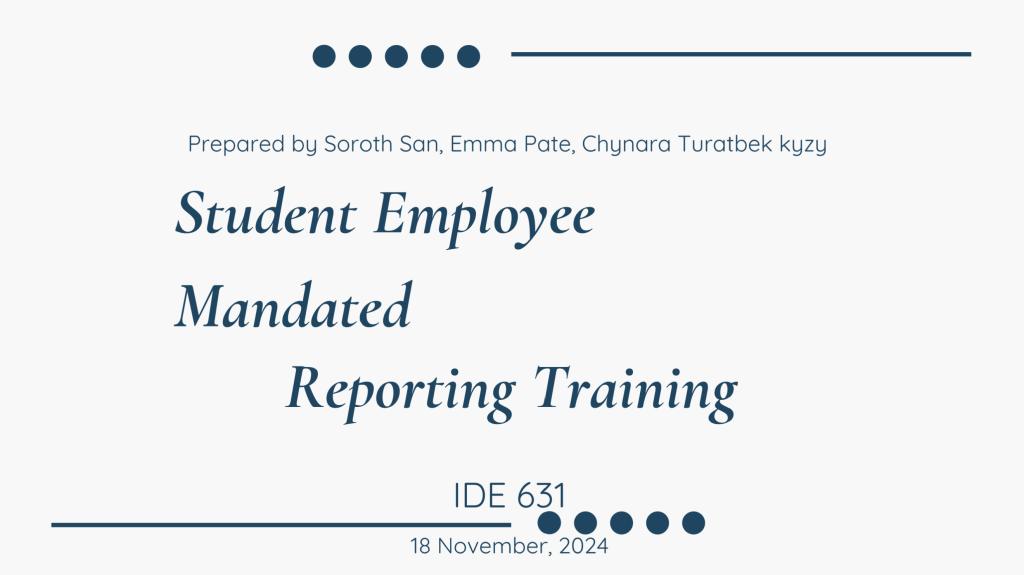
View the full Final Project Presentation Slides here.
Secondary Project
Instructional Design Model: ID Competencies
Project Title: Instructional Design Model: ID Competencies
Author: Soroth San
Project Description:
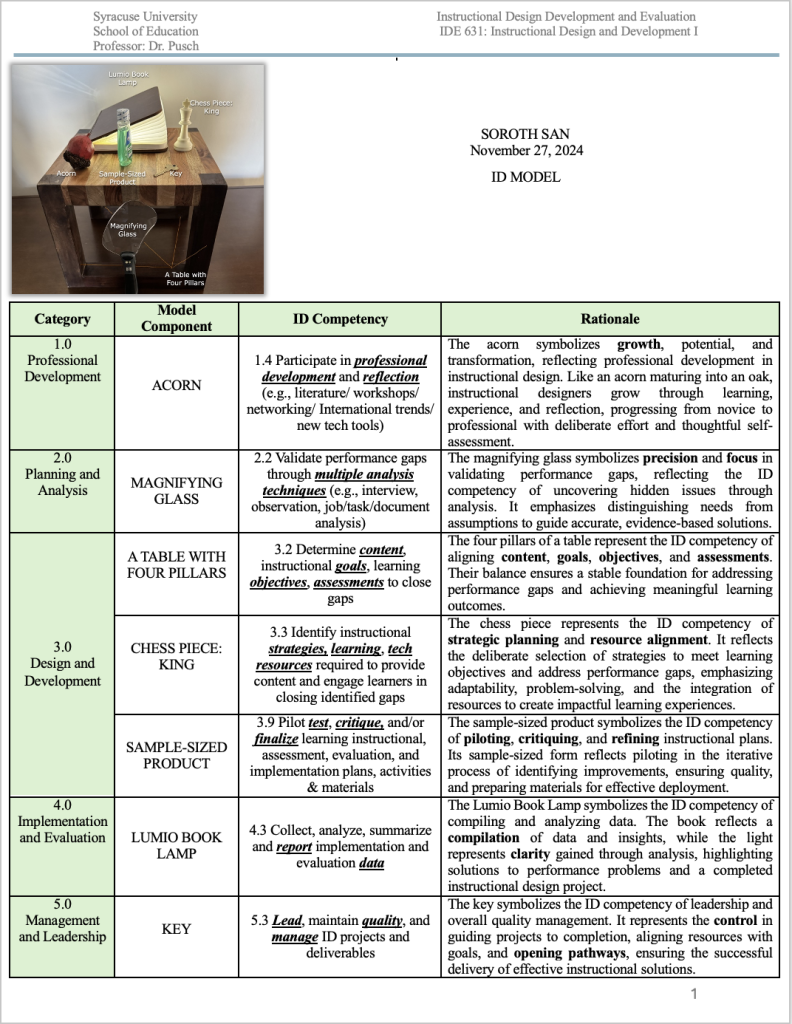
This assignment was completed for IDE 631 – Instructional Design and Development I (Fall 2024, Syracuse University). In this individual project, I created a personalized instructional design (ID) model that illustrates seven core competencies across the ID process, each represented by a symbolic metaphor: an acorn for professional growth, a magnifying glass for analysis, a four-pillared table for alignment of content and objectives, a chess piece for strategic planning, a sample-sized product for iterative development, a Lumio book lamp for evaluation and insight, and a key for leadership and quality management. This model reflects my growth as a reflective, strategic, and outcomes-focused instructional designer.
View the full Instructional Design Competencies report here.
Reflection & Self-Assessment
Developing my own instructional design model deepened my appreciation for the intentionality behind design frameworks. I learned how to translate competencies into symbolic representations that embody instructional values, such as growth, analysis, alignment, and leadership. This project strengthened my ability to synthesize theory and practice by aligning visual metaphors (e.g., the acorn, magnifying glass, chess piece) with key design stages. One challenge was ensuring that each symbol clearly reflected its respective competency without becoming overly abstract. Through feedback and reflection, I refined the model to ensure clarity and coherence. This experience shifted my thinking from simply using existing models to envisioning instructional design as a creative, principled process that evolves with context. I see real-world applications in using this model to communicate design processes to stakeholders and learners. Personally, this project represents my growth as a reflective designer, and I believe it contributes meaningfully to the field by offering a grounded, symbolic approach to design thinking.