Self-Evaluation
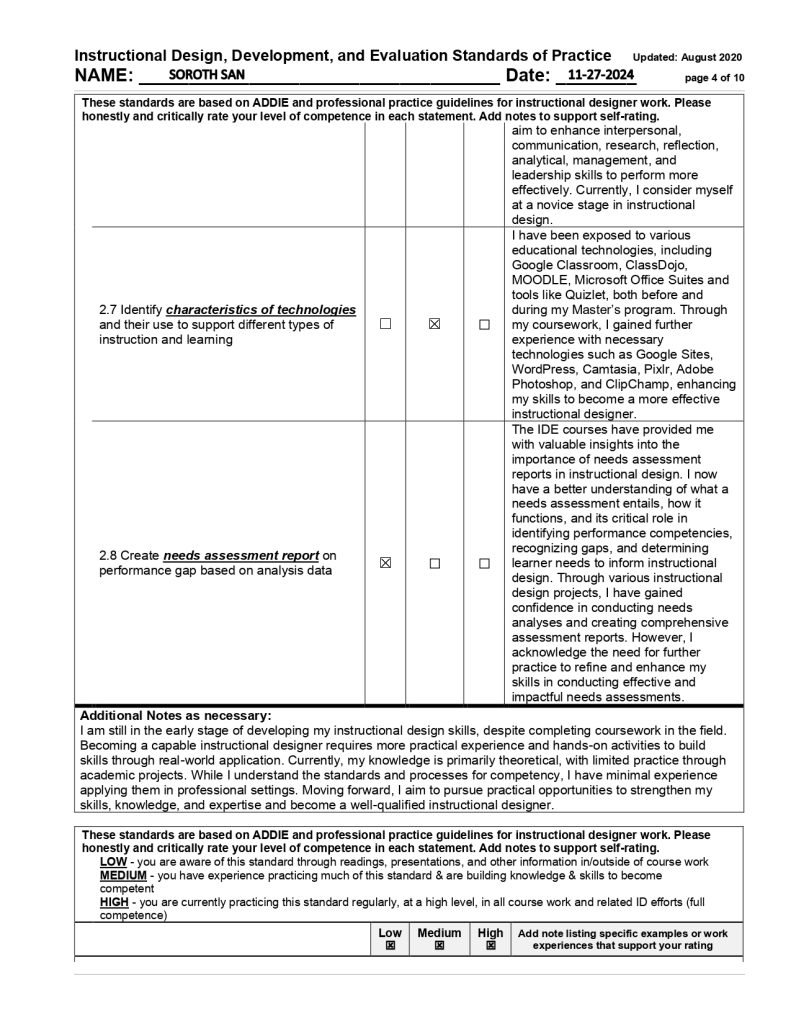
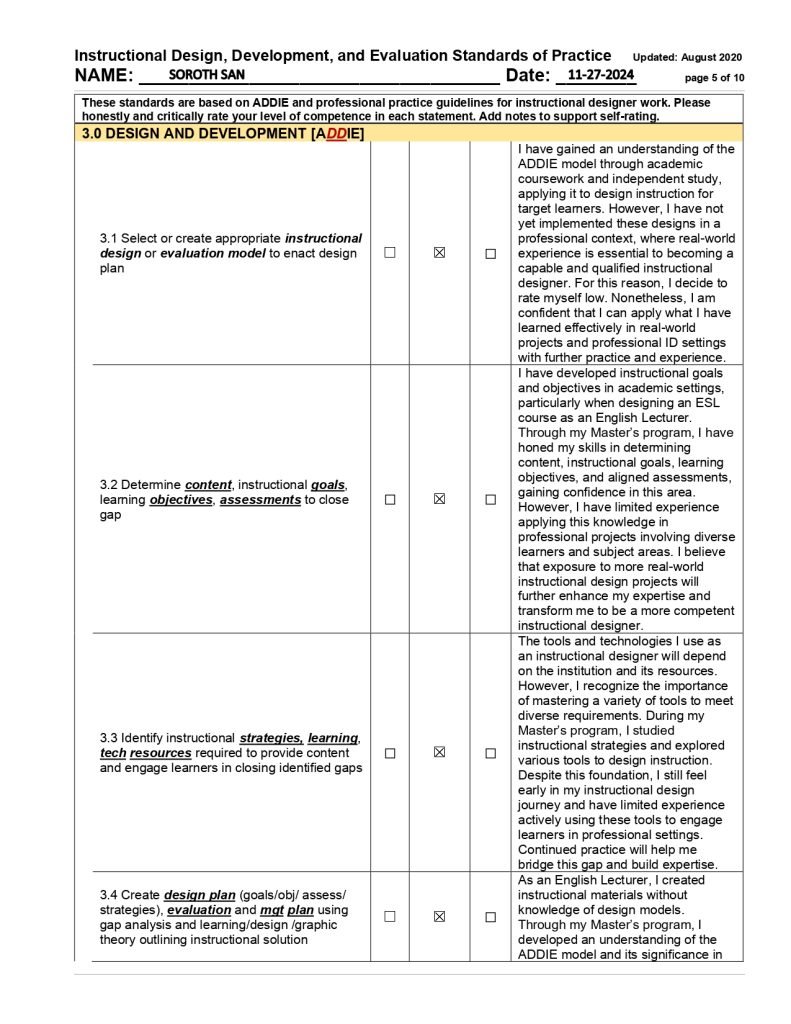
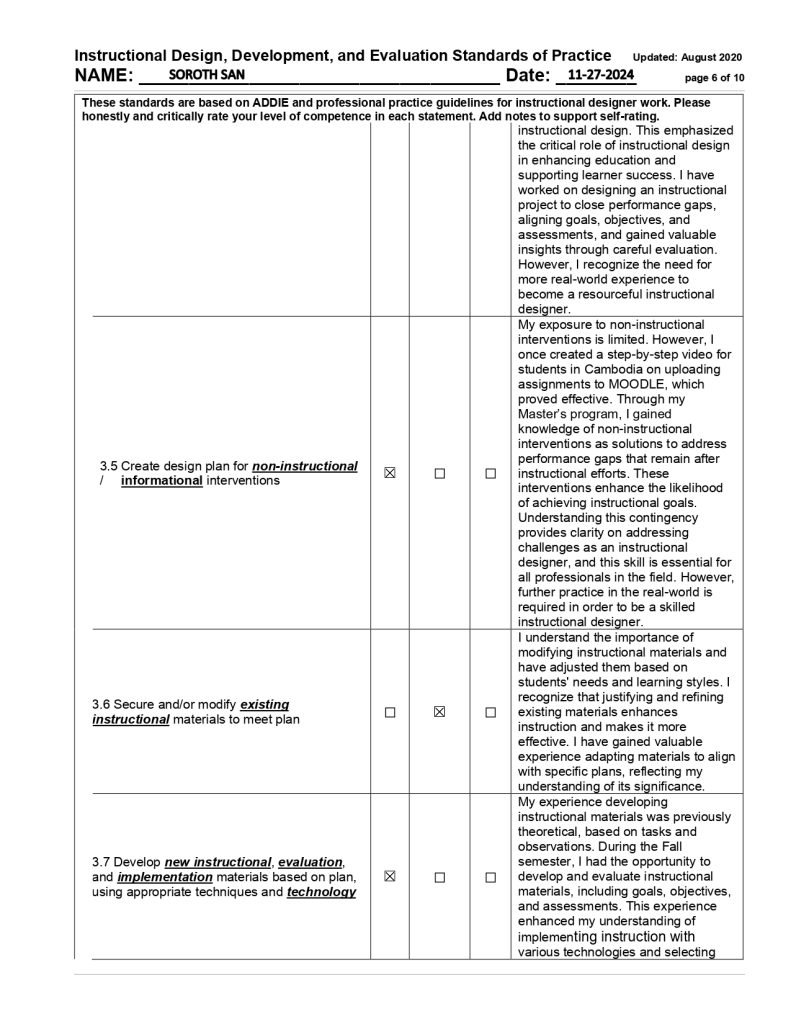
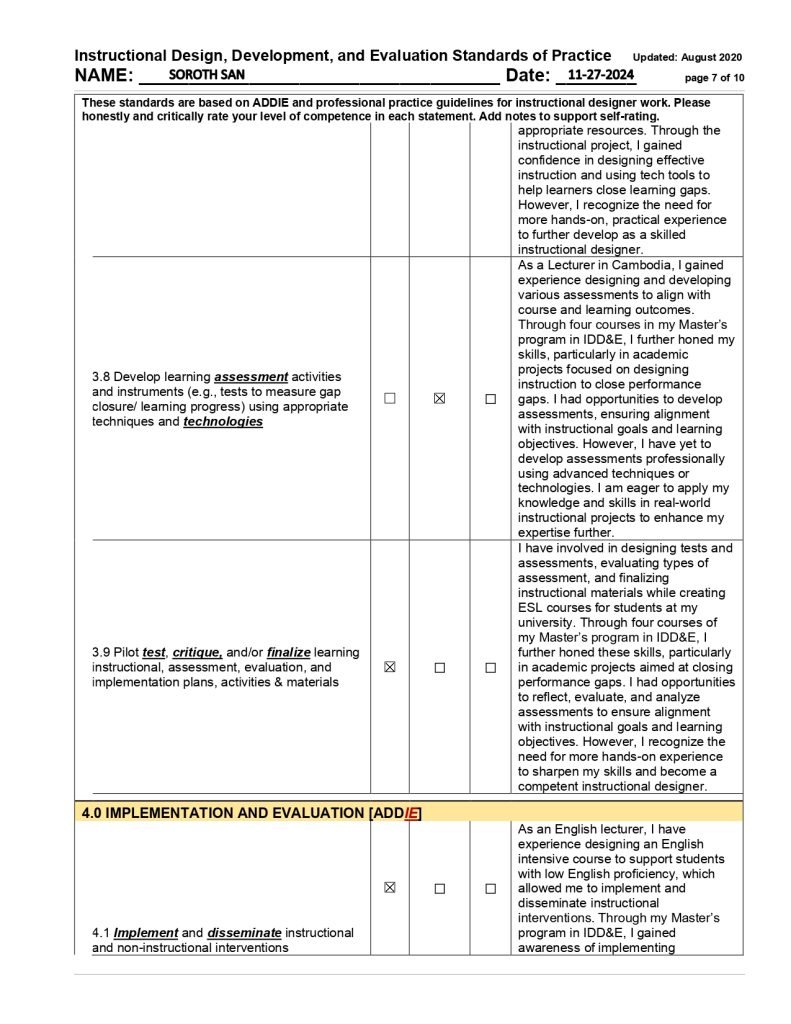
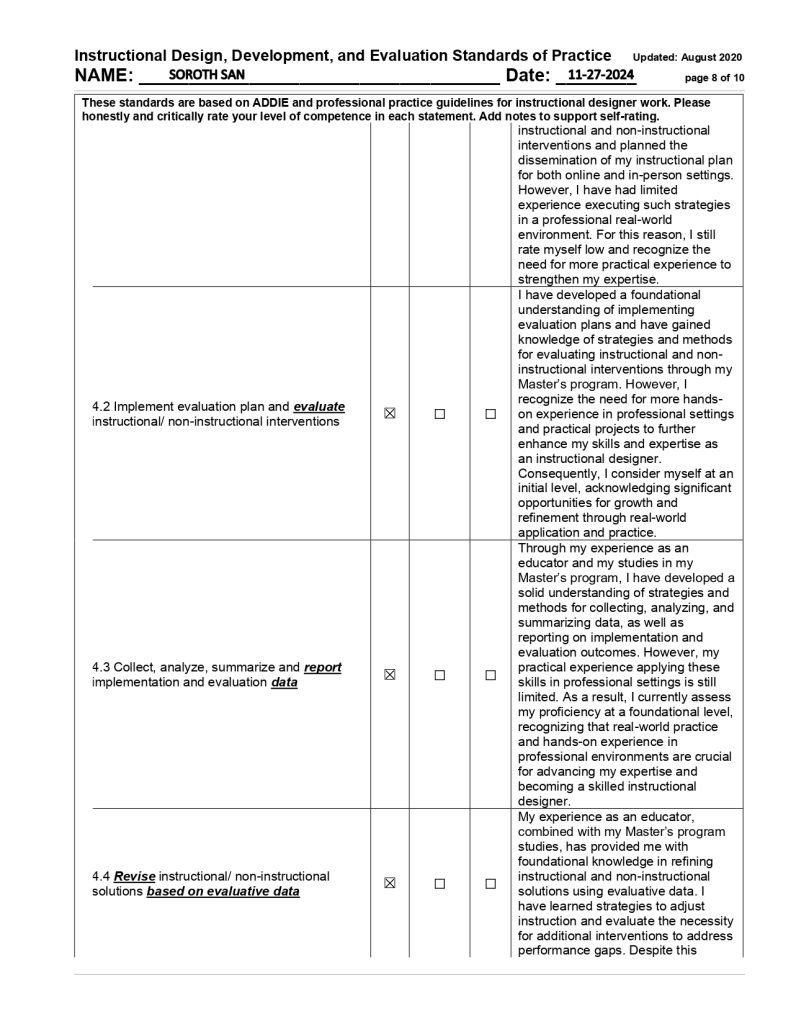
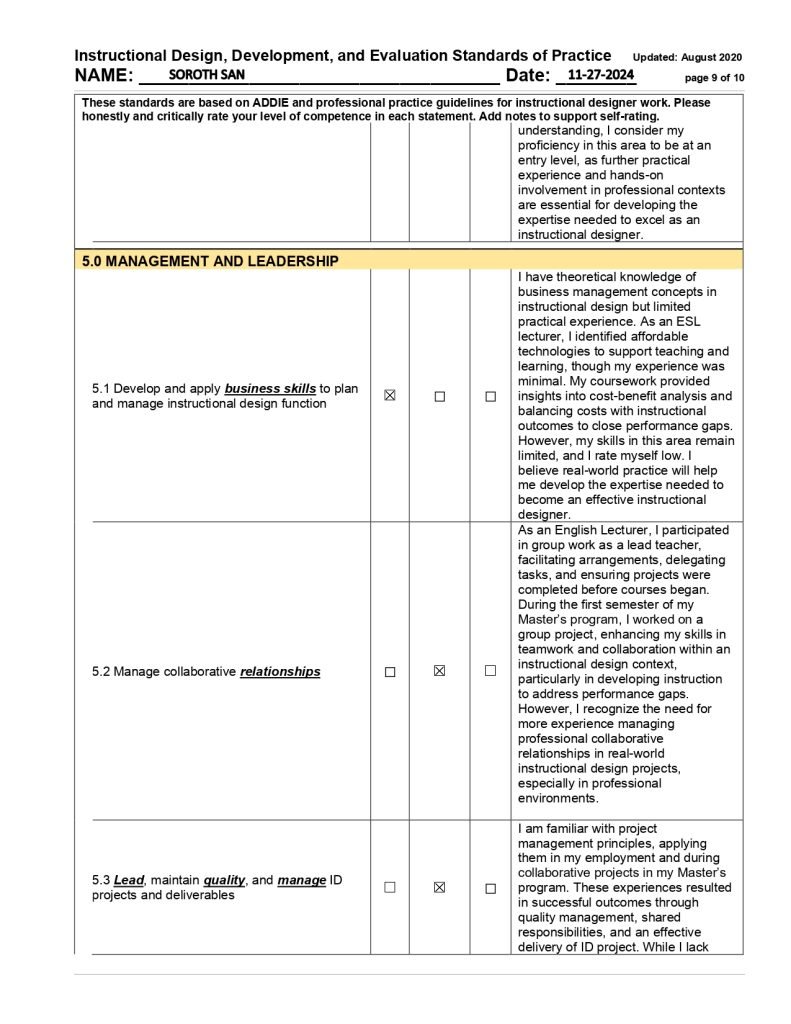
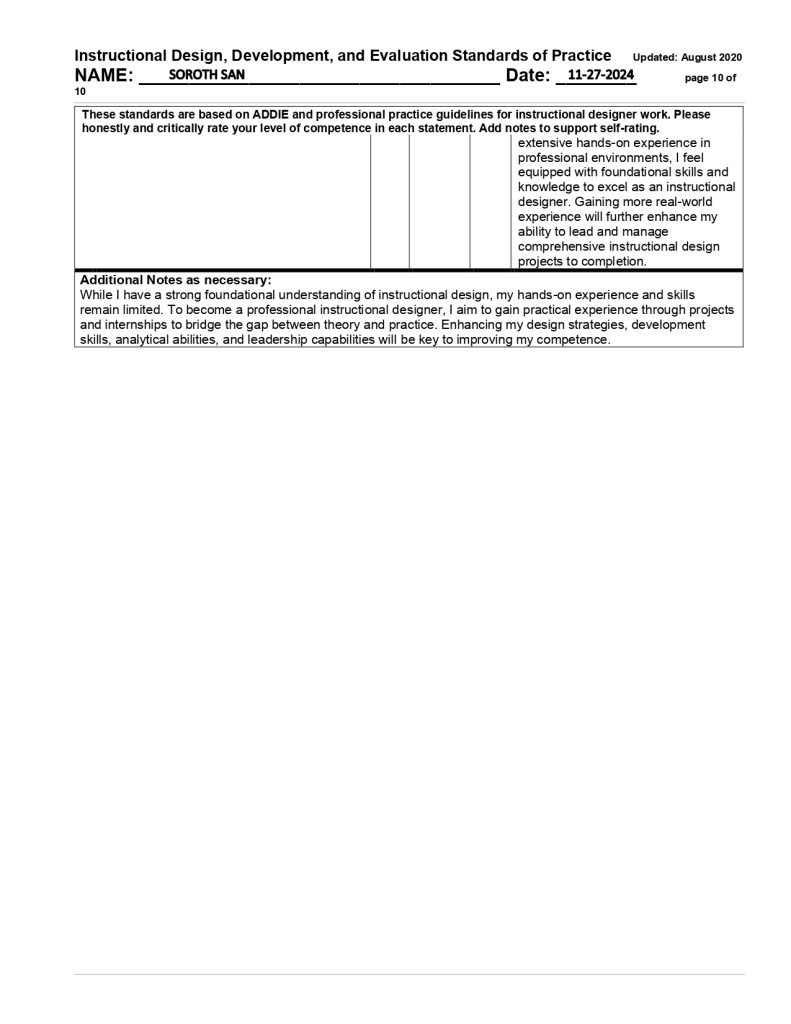
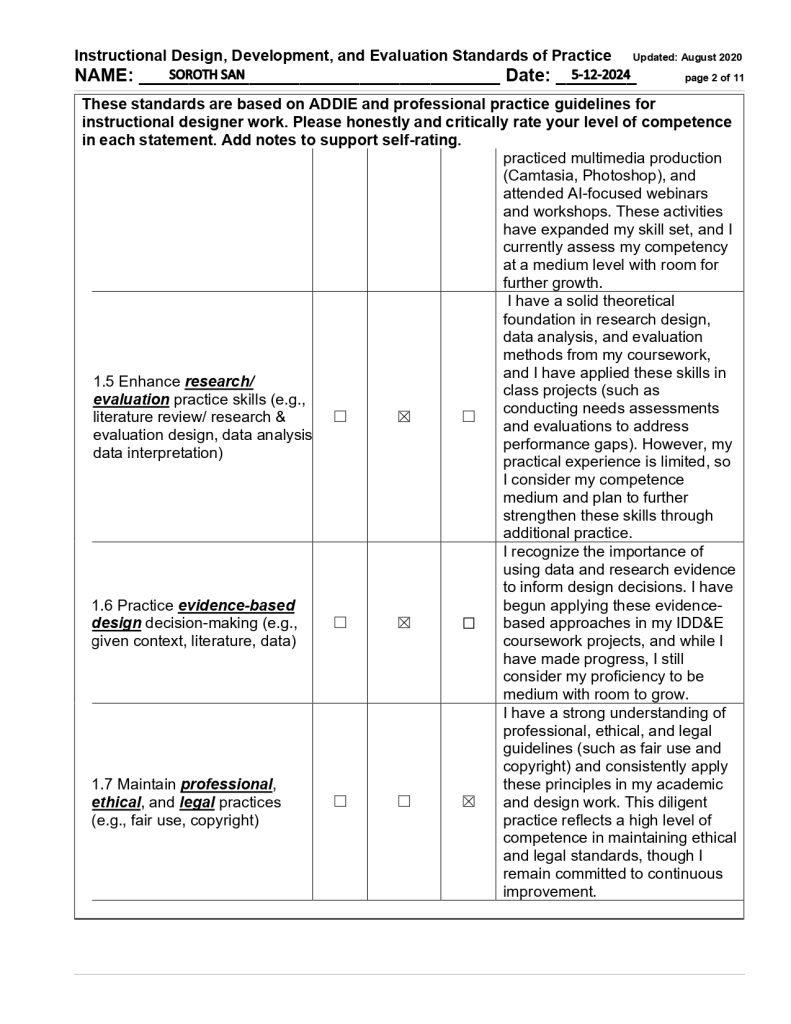
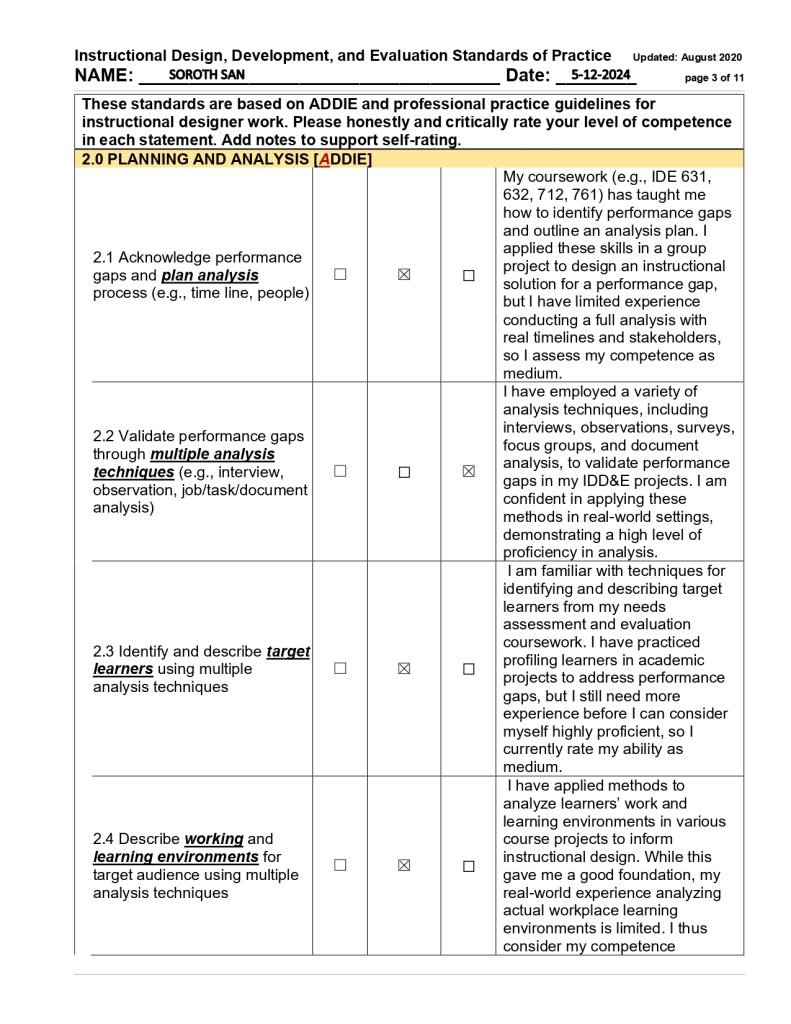
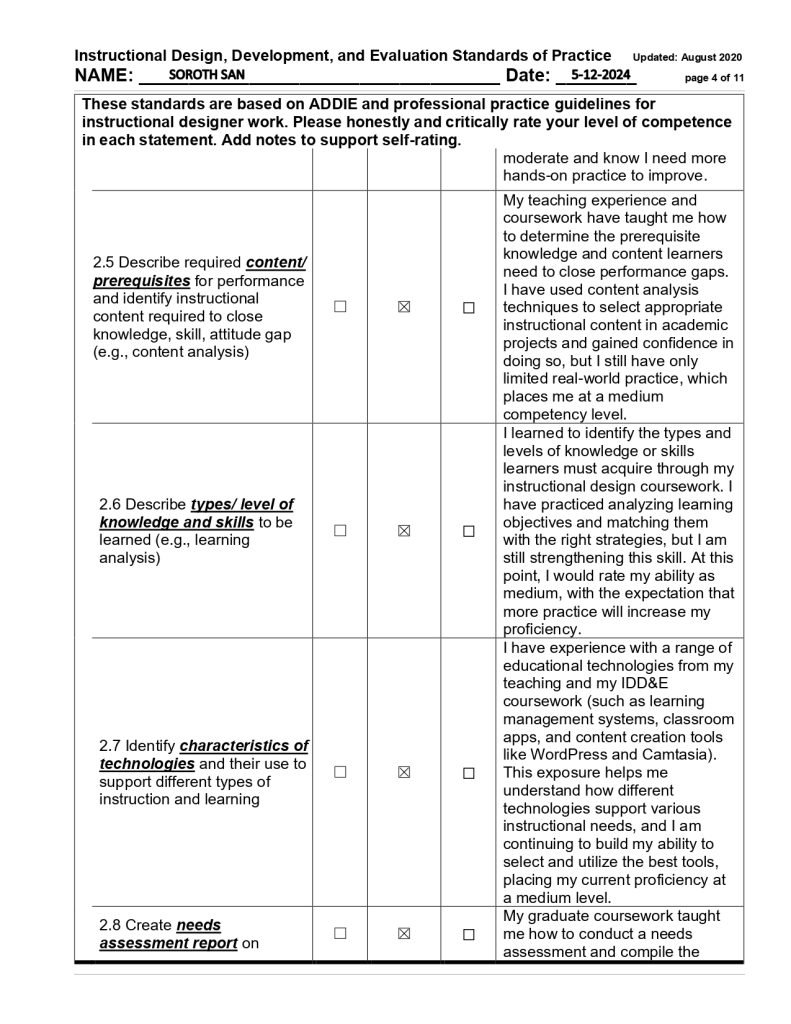
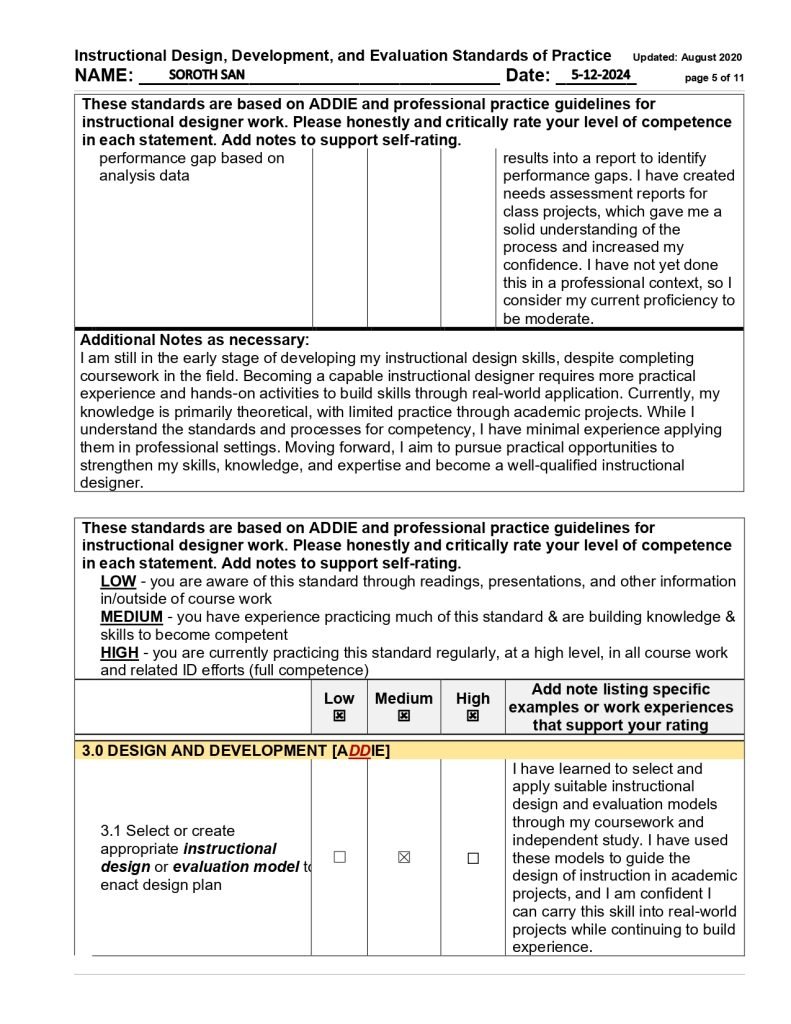
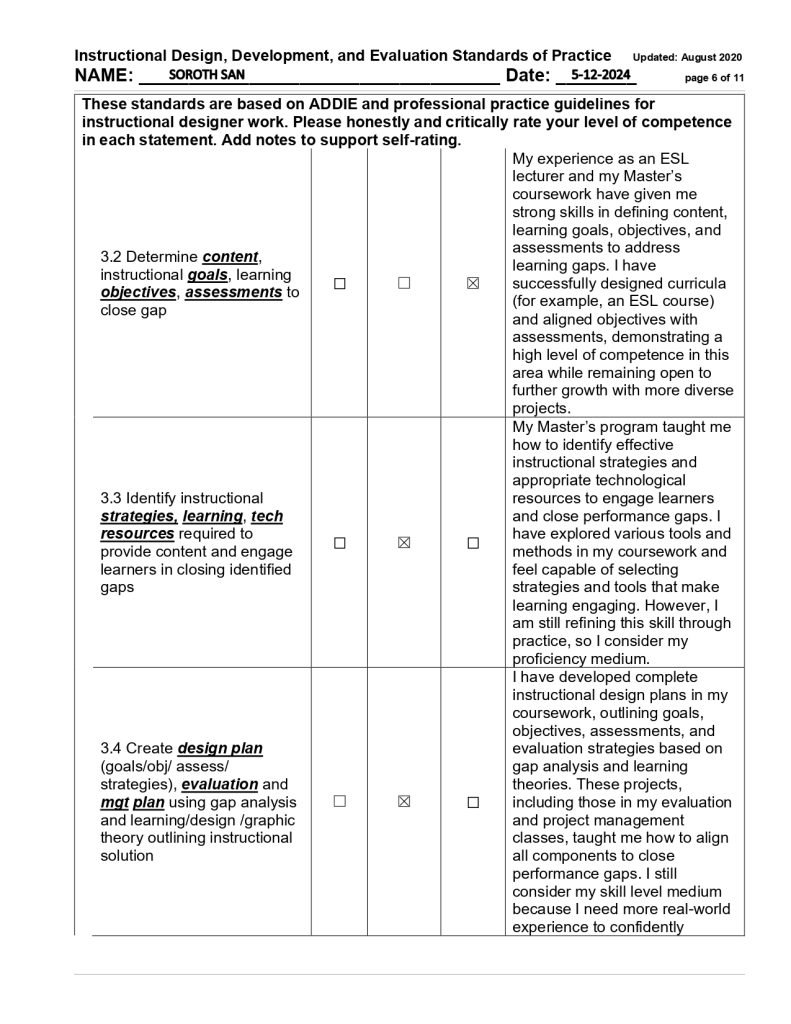
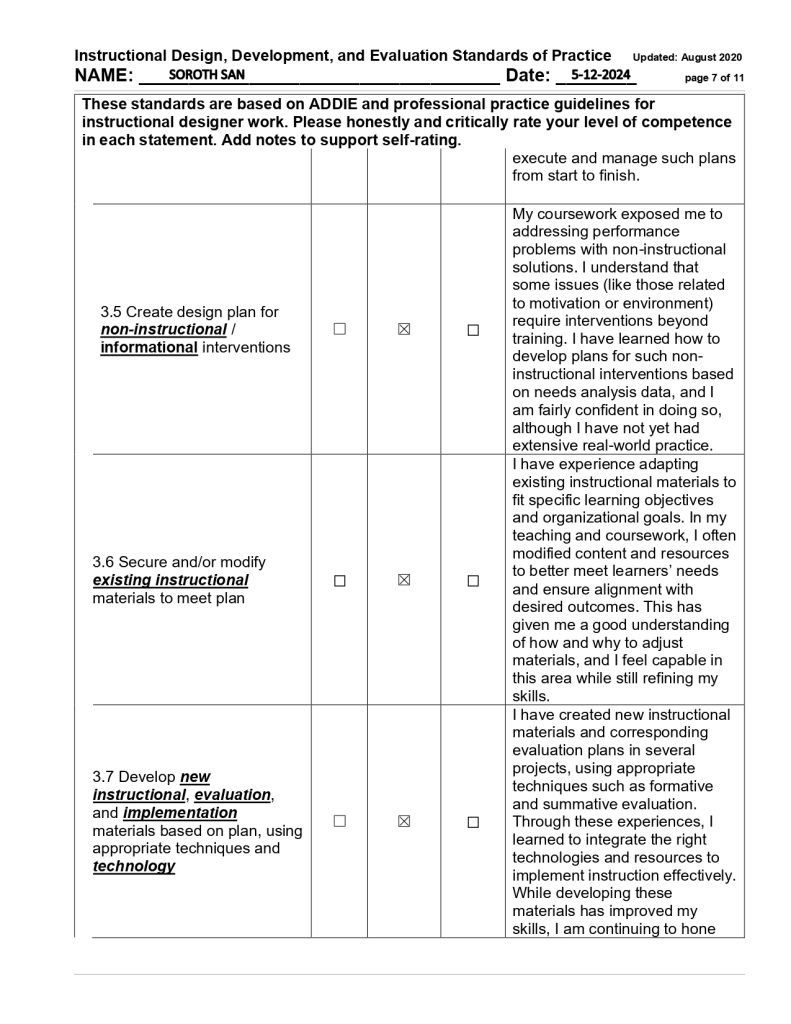
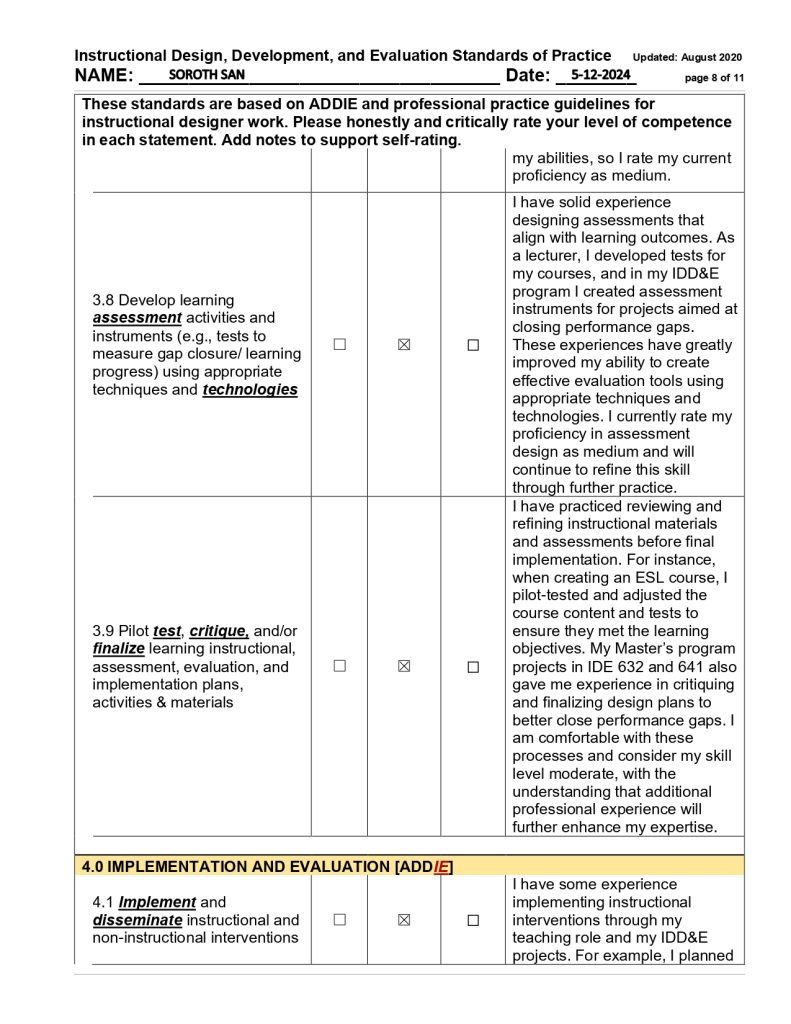
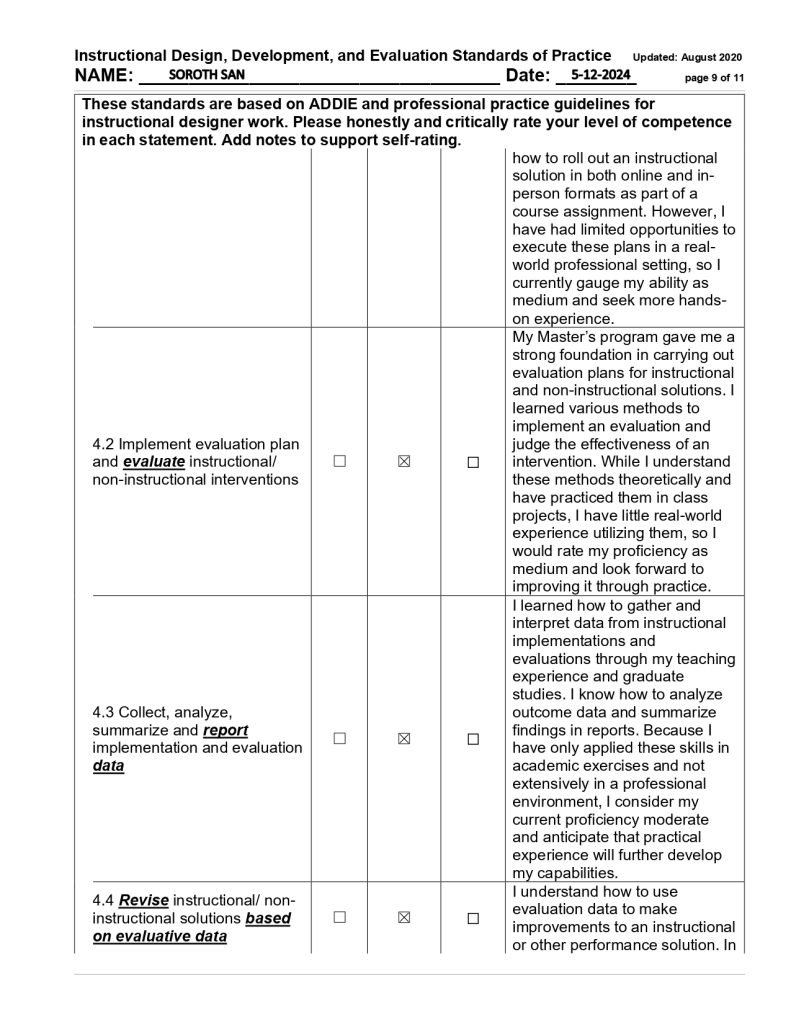
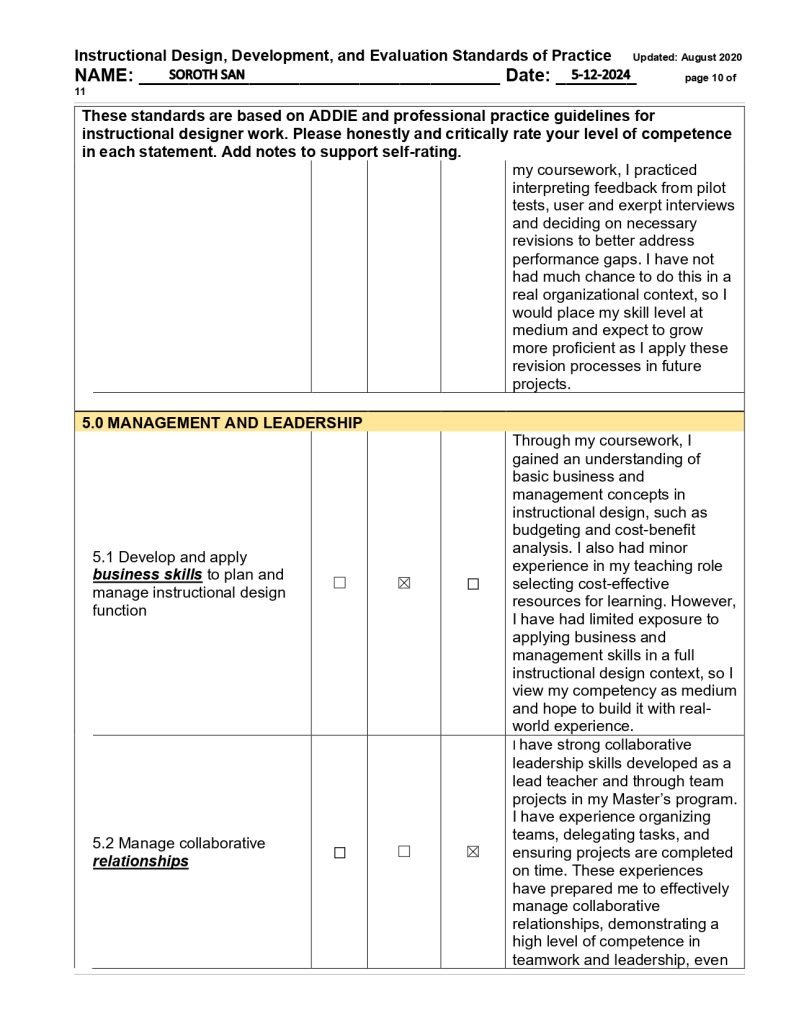
This page presents a reflective self-evaluation completed at three key stages, beginning, midpoint, and conclusion, of the Instructional Design, Development, and Evaluation (IDD&E) Program at Syracuse University. The purpose of this process was to assess personal growth, skill development, and evolving competencies throughout the academic journey. Program participation began on August 26, 2024, and culminated with graduation on June 27, 2025. Each evaluation served as a milestone to monitor progress, highlight strengths, and identify areas for continued improvement, offering a comprehensive view of the learning experience and professional development achieved over the course of the year.
Three-Phase Self-Evaluation Report
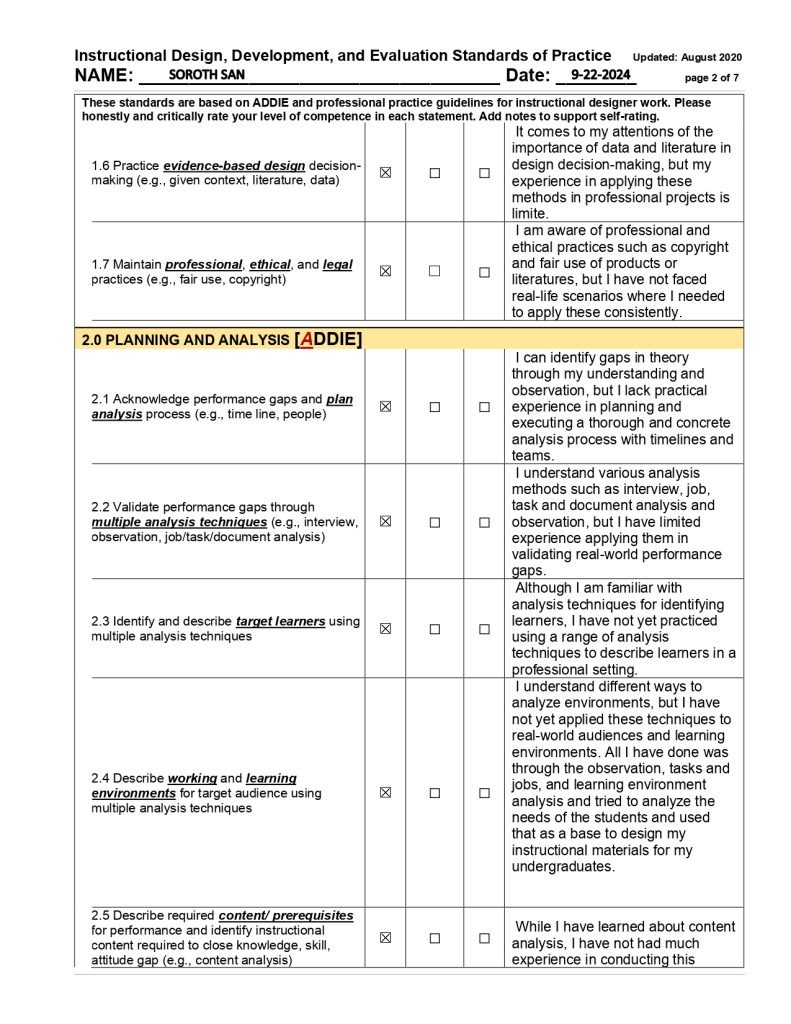
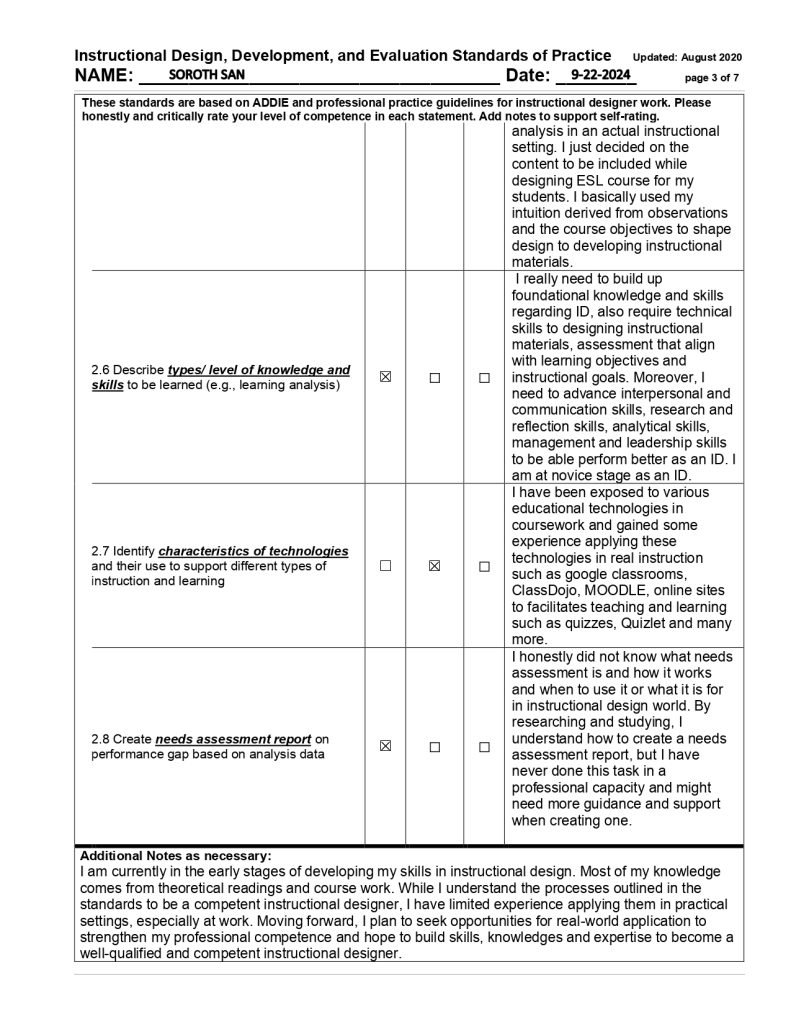
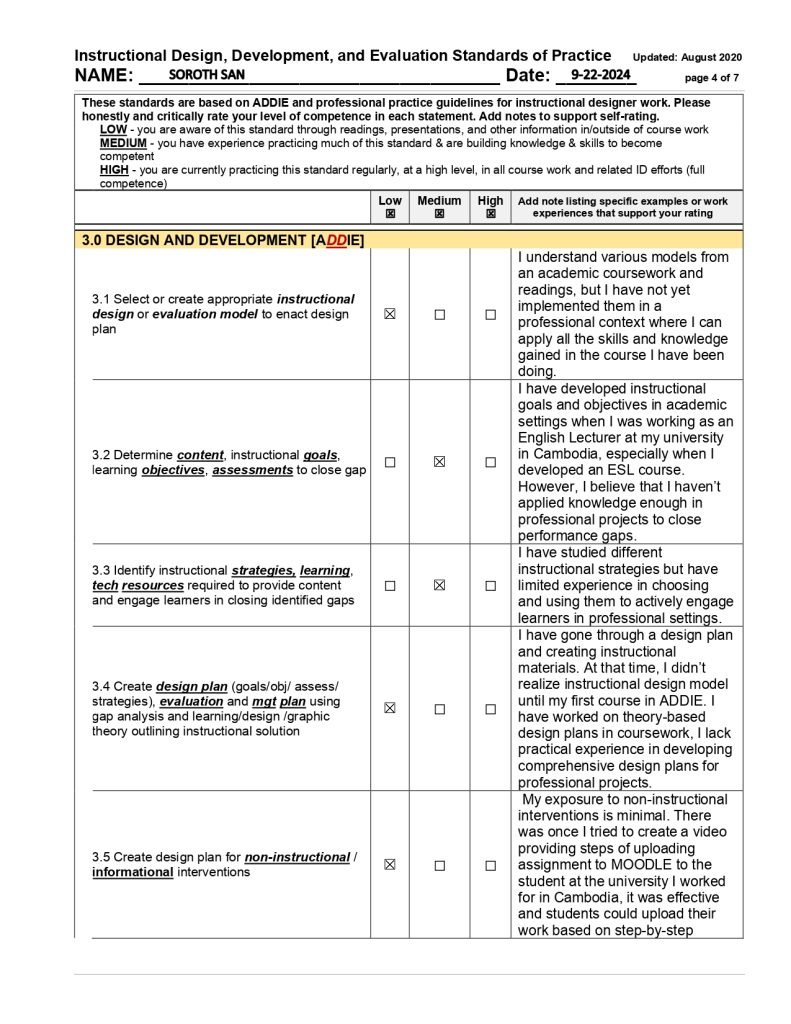
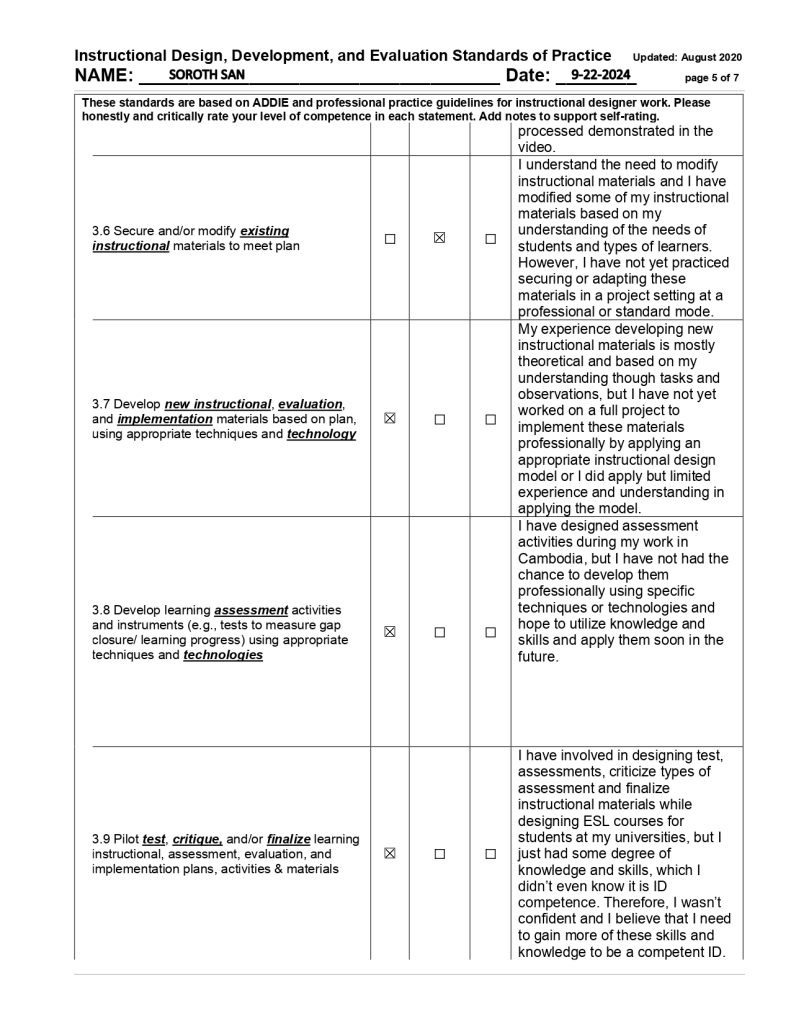
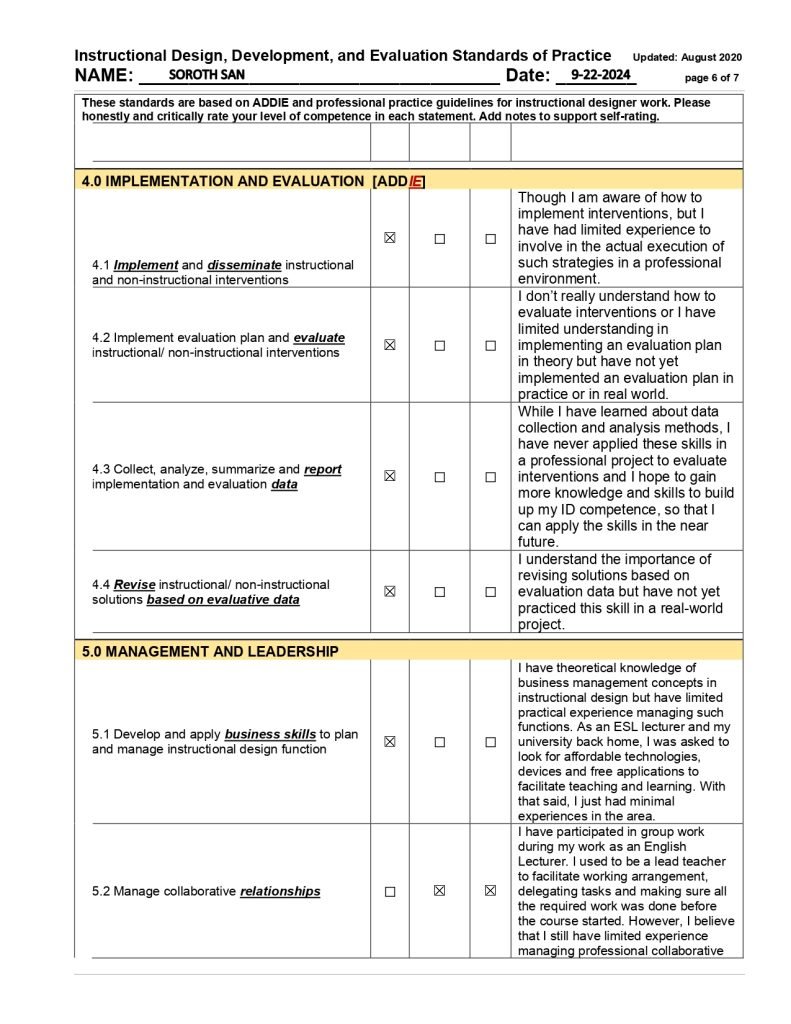
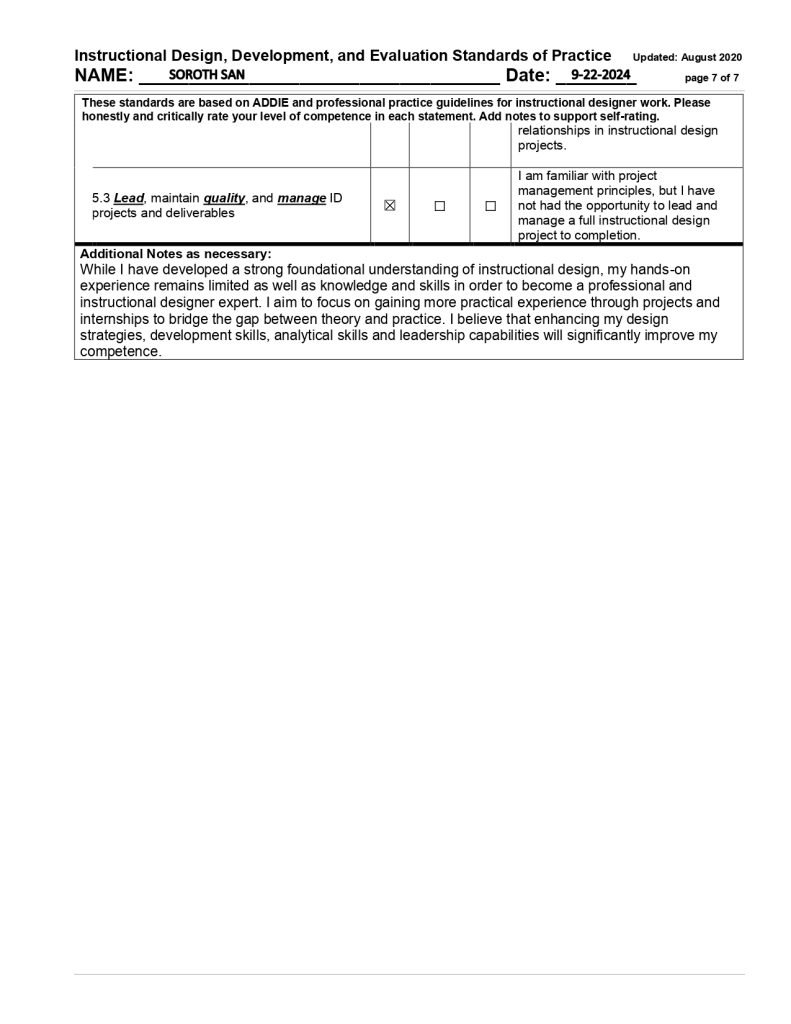
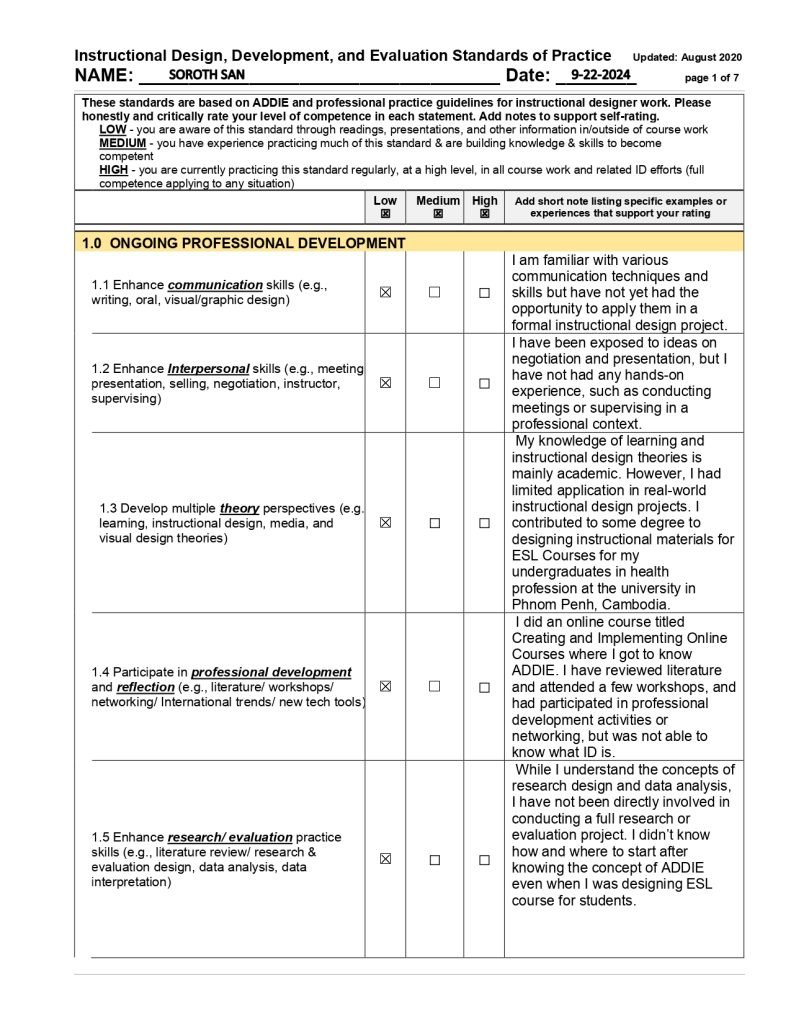
Self-Evaluation 1 - Beginning - September 2024
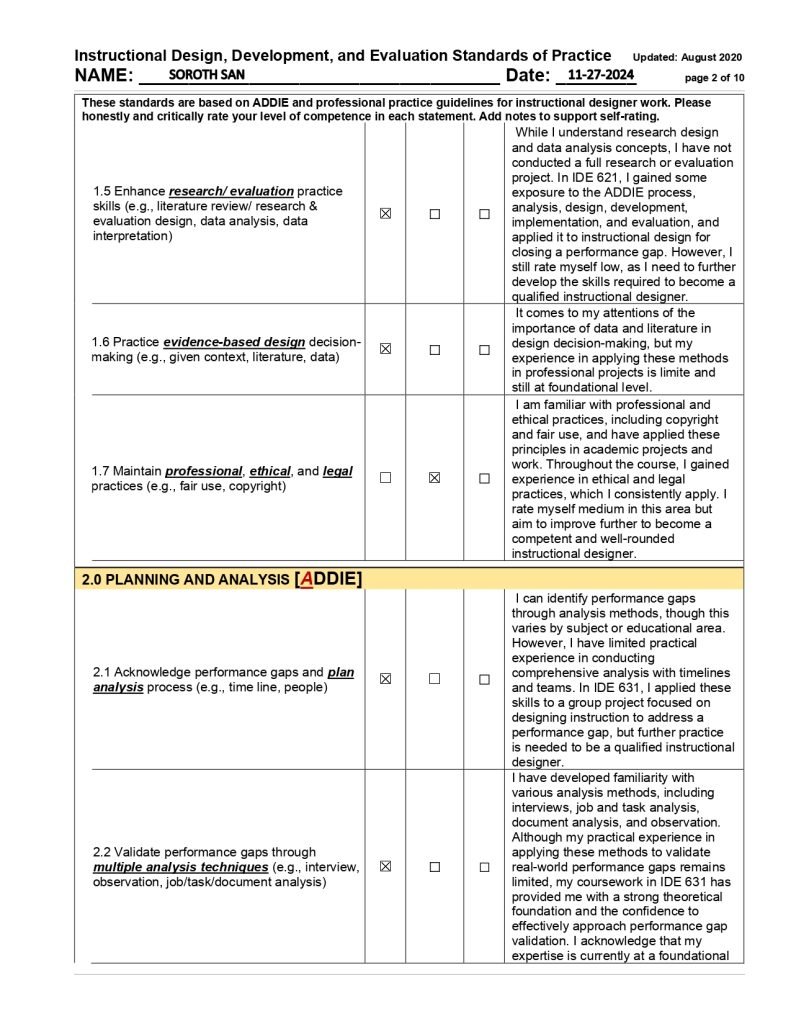
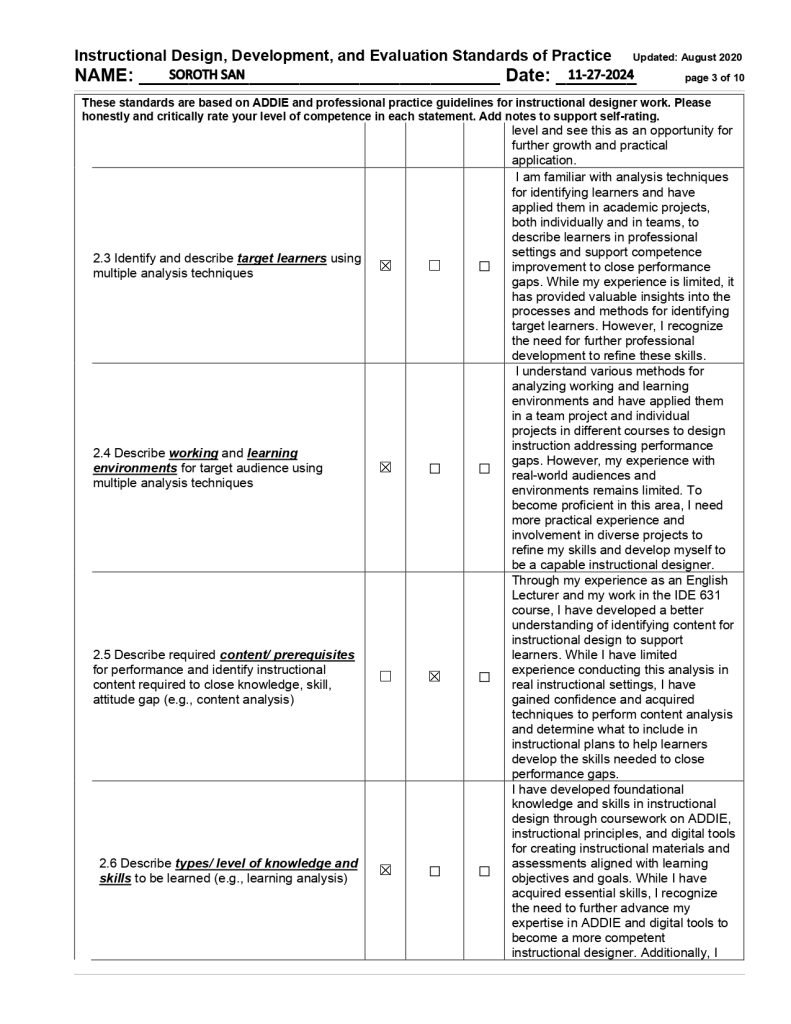
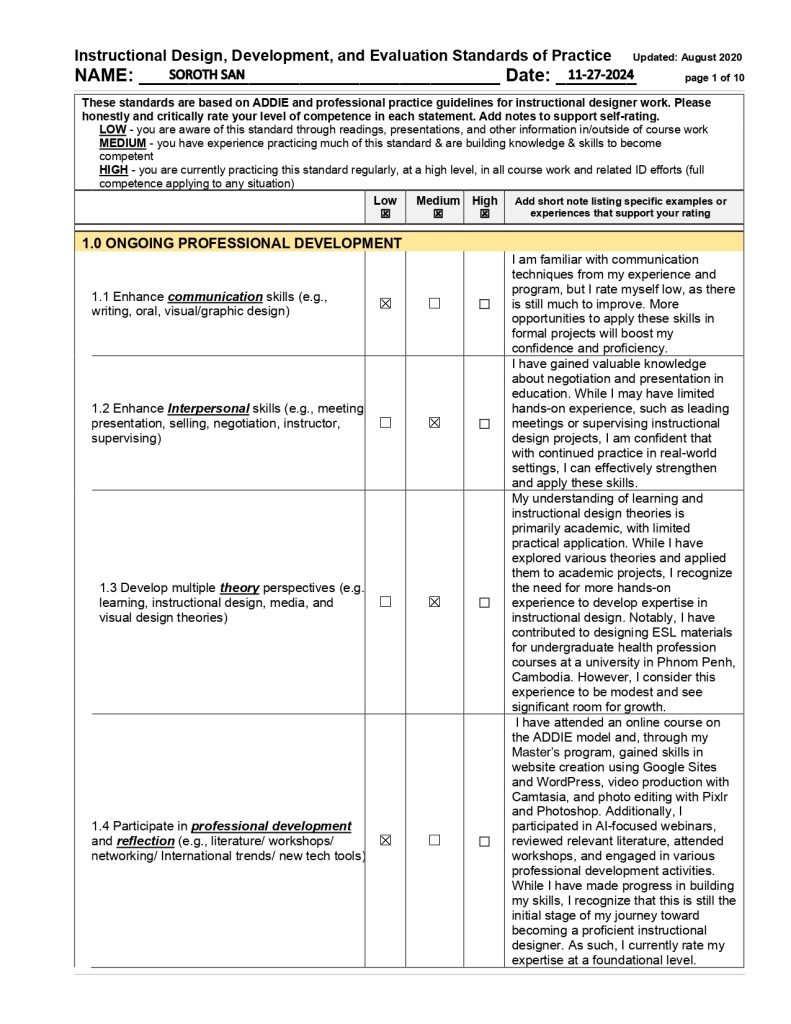
Self-Evaluation 2 - Midpoint - November 2024
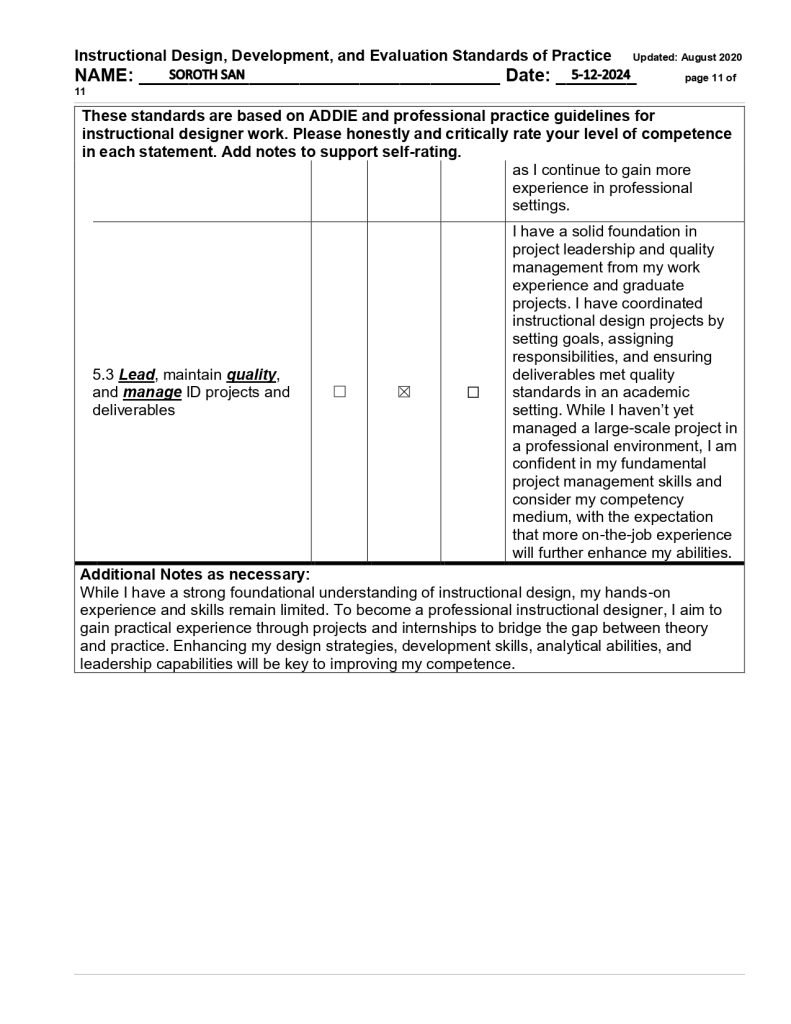
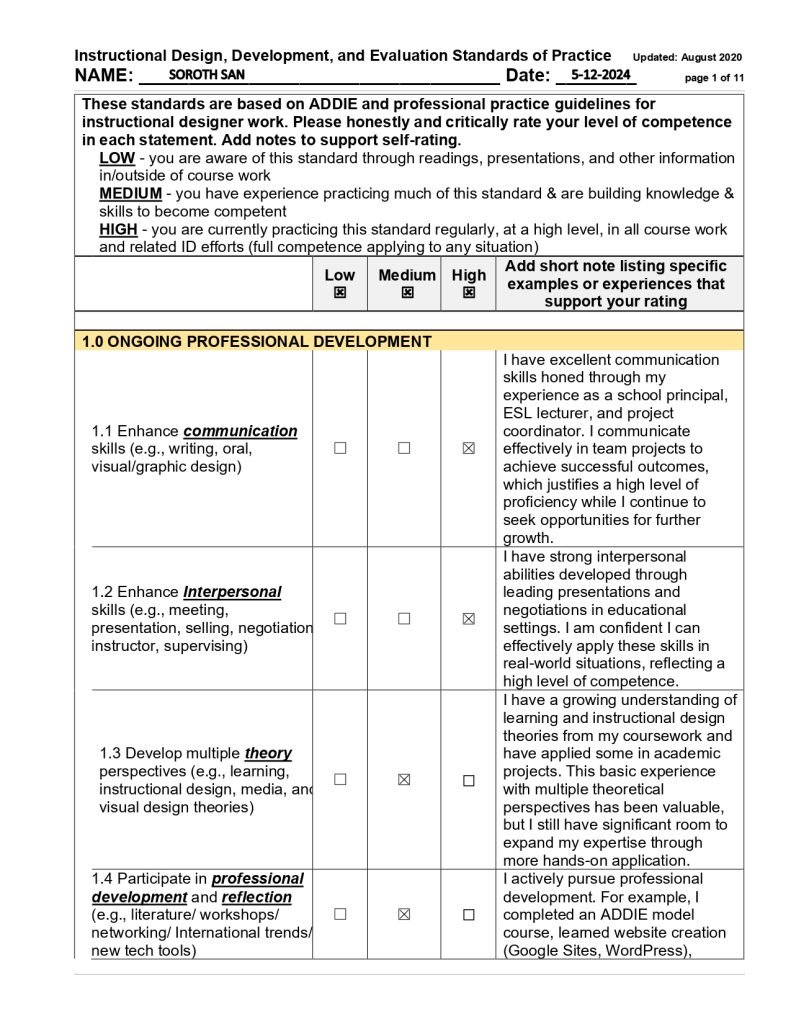
Self-Evaluation 3 - Conclusion - May 2025
One-Year Self-Evaluation – IDD&E Master’s Program
Program Growth
In September, at the start of the IDD&E Master’s program at Syracuse University, I completed my first self-assessment and found that I was at a novice stage in terms of overall instructional design competence. I had a basic theoretical understanding of instructional design principles, such as the ADDIE model, but little experience applying them in practice. I identified the need to enhance my interpersonal (1.2), communication (1.1), research (1.5), reflection (1.4), analytical (2.1), management (5.2), and leadership (5.3) skills to perform more effectively in this field. As a result, I marked most competencies at a low level during this initial assessment.
By the second self-assessment in November, I observed significant progress in applying instructional design principles in practice. In fact, some competencies that I had initially rated as low progressed to a medium level of proficiency by this stage, reflecting tangible improvement in my skills. During the fall semester, through my four courses, I worked on various assignments and projects, including a group project where we developed and evaluated instructional materials and assessments, which enhanced my understanding of how to implement effective instruction using appropriate technologies and to align instructional strategies with learning objectives in order to better close performance gaps. This hands-on experience bolstered my confidence although I acknowledged that I still needed more practical exposure to further refine my skills.
In my final self-assessment in May, I demonstrated substantial growth across multiple key competencies. I strengthened my communication skills (1.1) through collaborative projects with peers and through class presentations, achieving a high level of proficiency in this area. I also became more adept at conducting comprehensive needs assessments (2.8) to identify performance gaps and inform design decisions, evolving from an initially limited awareness to a confident application of this skill. Furthermore, I was able to create comprehensive instructional design plans and adapt learning materials for different audiences, reflecting the maturation of my design and development skills. Additionally, I improved significantly in evidence-based design decision-making (1.6) and maintained strong ethical practices (1.7) by integrating relevant research findings and data to guide effective instructional strategies. By the end of the program, I felt more confident in my capabilities as an instructional designer, while recognizing that continued practical experience is necessary to reach full professional competence. This pattern of growth was mirrored across other IDD&E competency domains as well, indicating that I experienced development throughout the program.